
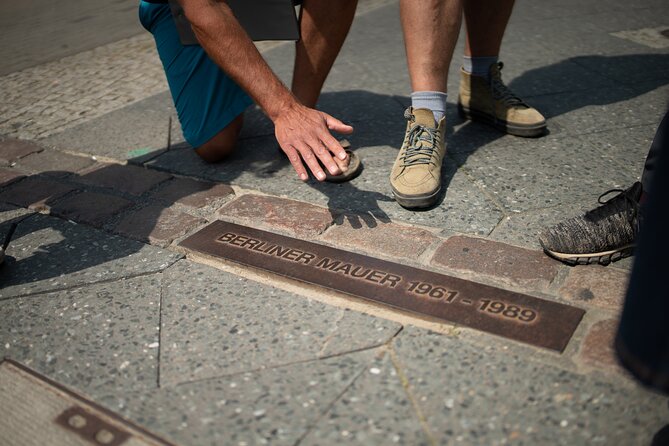
REVIEW · BERLIN WALL
Cold War, Berlin Wall, Spies and the East Side Gallery
Cold War Berlin feels close up. This 3-hour tour strings together key sites that explain how division worked on the ground, from the Palace of Tears to the East Side Gallery, with guided stops that turn big events into human moments. I love the way the guide weaves spy, informant, and escape-attempt stories into what you can see in front of you, and I also like that you get a mix of architecture, city squares, and Wall remnants instead of only one kind of memorial.
One thing to plan for: you’ll need an AB public transport day pass to move between stops, and the tour keeps going in most weather. Bring comfortable shoes, keep your camera handy, and expect some walking and city-street time.
In This Review
- Key points before you go
- Meeting at Friedrichstraße, then straight into the checkpoint mood
- Tränenpalast: where paperwork and emotions met
- Alexanderplatz: the East Berlin center you can still feel
- Karl-Marx-Allee: monumental design as a message
- Friedrichshain and the spy-and-surveillance thread
- Berlin Wall area: death-strip reality, not just a skyline view
- East Side Gallery: graffiti you can read with Cold War context
- Price and what you really get for 3 hours
- Who this tour is best for
- Should you book Cold War, Berlin Wall, Spies, and the East Side Gallery?
- FAQ
- Where do I meet the guide?
- What stops are included on the tour?
- Do I need public transport tickets during the tour?
- How long is the tour and what is the walking like?
- Is the tour wheelchair accessible?
- Is food included?
Key points before you go
- Palace of Tears context: see one of the most emotional checkpoints tied to cross-border separations
- Karl-Marx-Allee as propaganda in stone: spot how politics shaped monumental urban design
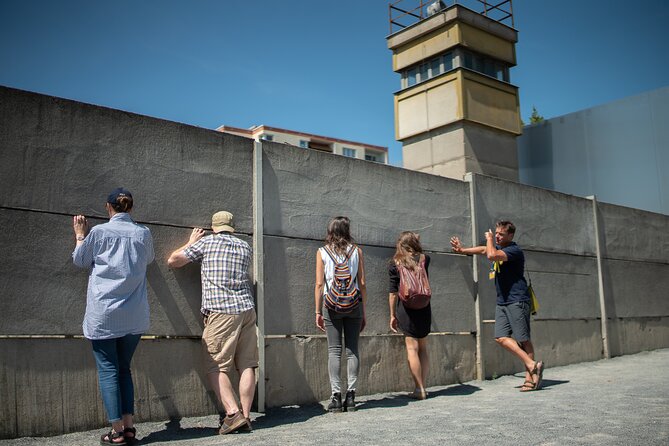
- A real Wall walk with the death-strip story: understand what made escape so dangerous
- Alexanderplatz and East Berlin daily life: hear how the GDR felt beyond slogans
- East Side Gallery with meaning intact: art on the Wall, explained with Cold War background
Other walks along the Wall we have reviewed
- Skip-the-Line: Berlin Wall Museum at Checkpoint Charlie★ 4.1 · 2,041 reviews
- Berlin: East Side Gallery Spree Cruise in a Solar Catamaran★ 4.0 · 1,039 reviews
- Cold War, Berlin Wall, Spies and the East Side Gallery★ 5.0 · 1,024 reviews
- THE WALL: asisi Panorama Berlin Ticket★ 4.5 · 580 reviews
Meeting at Friedrichstraße, then straight into the checkpoint mood
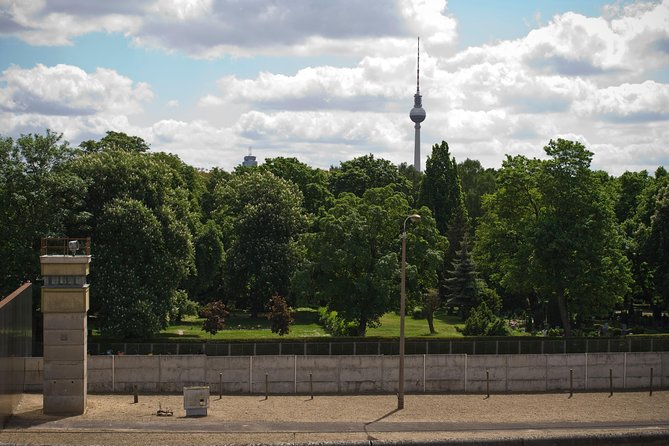
You start outside Friedrichstraße station at the square beside the Palace of Tears, Tränenpalast. The guide is easy to spot, with a yellow name badge and a yellow umbrella, which helps when the group is moving fast. It is a good warm-up location because Tränenpalast immediately sets the tone: this was a place tied to separation, paperwork, and the tension between wanting to reunite and being blocked.
The first stop is brief, about 20 minutes, but it works like a landing strip for the rest of the tour. You’re not just looking at a building. You’re learning what “the border” meant in daily terms, and why simple actions, like waiting or asking for documents, could become life-altering moments. If you like history that feels practical, this start is strong.
If you’re using optional pickup, you’ll meet at the Tourist Information at Brandenburg Gate, Pariser Platz 1. Either way, you’ll be positioned to move quickly and efficiently through central Berlin.
Tränenpalast: where paperwork and emotions met
Tränenpalast matters because it represents the human side of a system that often gets summarized as politics and ideologies. Even in a short visit, you get a sense of how the Cold War created an everyday atmosphere of control. That makes later Wall stops hit harder, because you understand the stakes long before you reach the graffiti and concrete.
A smart tip here: switch from sightseeing mode to listening mode. On this kind of tour, the guide’s story is doing as much work as the sights. When the guide names specific mechanisms like surveillance, informants, and escape attempts, you’ll start noticing how the city’s layout and checkpoints supported those systems.
And because the tour is only 3 hours, you do not have time to “wander and hope.” This is a guided flow, so stay with the group and let the narrative do its job.
Alexanderplatz: the East Berlin center you can still feel
After the short transfer, you arrive at Alexanderplatz for a guided stop and time to look around, about 20 minutes. Alexanderplatz can feel like a normal Berlin square at first glance, with transit connections, shops, and foot traffic. The tour’s value is that it reframes the place, so you see it as a stage for life under the GDR, not just a photo spot.
You’ll hear how the East German world functioned, what everyday power looked like, and why public spaces still carry hints of the political system that once dominated them. The architecture and the scale of the square help you understand how the GDR wanted to present itself, especially through design choices.
If you’re the type who likes asking questions, this is a good moment. Many guides on this topic are praised for answering everything from big-picture questions to small “how did it work” details. Names like Paul, Klaus, Nikolai, and Eran show up for a reason, and their common thread is clear, story-led explanations that make you feel oriented instead of overwhelmed.
Karl-Marx-Allee: monumental design as a message
Next comes Karl-Marx-Allee, with a guided walk and sightseeing time, about 20 minutes. This is one of the most “readable” stops on the tour because the boulevard itself is a statement. The guide helps you decode the propaganda hidden in the scale and style, so you understand why monumental architecture was never just about aesthetics in the East.
What I like about this segment is how it gives your brain an anchor. Instead of only hearing about escapes and secret police, you’re seeing how the regime tried to shape beliefs through what people walked past every day. The boulevard feels imposing, and that is exactly the point.
One practical consideration: Karl-Marx-Allee is a long visual corridor, so if the weather turns, you’ll want your comfortable clothes ready. The tour continues regardless, so your best strategy is dressing for Berlin rather than hoping for perfect conditions.
More of the divided city, written up in full


Friedrichshain and the spy-and-surveillance thread
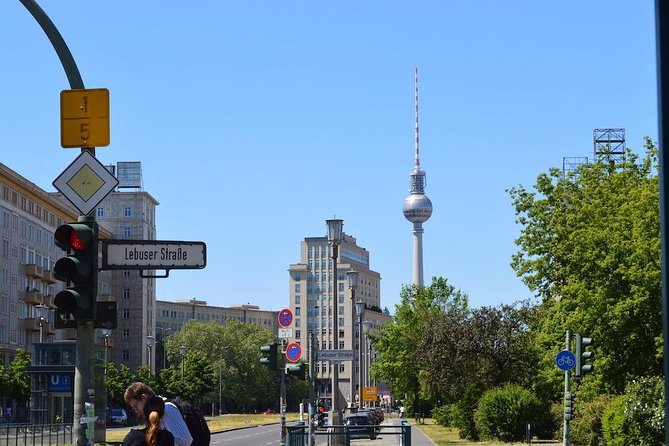
You then move into Friedrichshain for guided sightseeing, about 20 minutes. This part helps connect the dots between city neighborhoods and the Cold War reality that shaped them. You’re learning how ordinary people were monitored, why informants mattered, and how the line between public life and political pressure could feel thin.
This is the kind of stop where good guidance turns “a neighborhood” into “a plot.” The best guides keep the storytelling grounded in real locations and timelines, and the overall reputation for guides on this route leans that way. People often highlight how guides can bring the period to life with vivid details and a calm ability to handle questions without rushing.
If your travel style is fast and efficient, this segment works because it keeps your route moving while adding meaning. If you prefer long museum-style pacing, remember the tour is intentionally structured into quick, high-impact blocks.
Berlin Wall area: death-strip reality, not just a skyline view
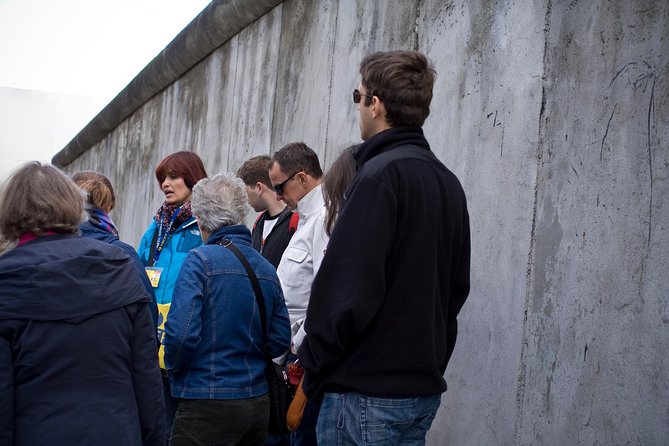
The heart of the tour is the Wall walk. You get guided time on the Wall area, about 16 minutes, which is enough to grasp the basic layout and learn what the “death strip” concept meant in practice. The tour also aims to show the original death strip area, connecting it to escape attempts and the constant threat of the Stasi watching from the shadows.
This is a moment where photos are natural, but listening is more important. The Wall doesn’t need to be dramatic. The system does that for it. As the guide explains how people tried to get across and how barriers, guards, and surveillance raised the risk, you start to understand why escape attempts were both brave and terrifying.
I also appreciate the emotional pacing. Even though you will see the East Side Gallery afterward, the Wall segment gives you the serious baseline first. That order matters because it prevents the art from feeling like it exists in a bubble.
A small note: the tour includes trains between sections, with short rides of just a few minutes. That keeps the pace efficient, but it also means you should be ready to stand, move, and re-group quickly.
East Side Gallery: graffiti you can read with Cold War context
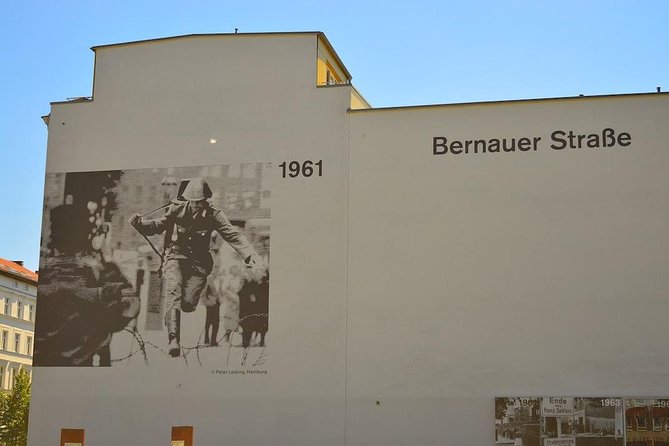
You finish with the East Side Gallery for about 20 minutes of guided sightseeing while walking along the famous Wall stretch. The East Side Gallery is a top Berlin photo stop, but it becomes far more meaningful when you’ve already understood the mechanisms of division and control.
The tour’s angle is key: you don’t just see a long open-air art wall. You learn how the Wall was transformed from oppression into a canvas for public voice. That background changes how you interpret the graffiti. It becomes a statement of timing, freedom, and political shift, not only street art.
This segment is also where the guide’s storytelling style shows up most. Guides like Xavier, Maria, and Jamie G are often praised for keeping the group engaged and talking through the details in a way that works even if you came in knowing little. I like that practical tone because it makes this tour a good choice for first-time Berlin visitors who want context, but it still satisfies history fans who crave specifics.
If it starts raining, you might get covered by the guide’s adaptation. More than one guide is known for keeping things organized and caring for the group when conditions change, which matters on a walking route.
Price and what you really get for 3 hours
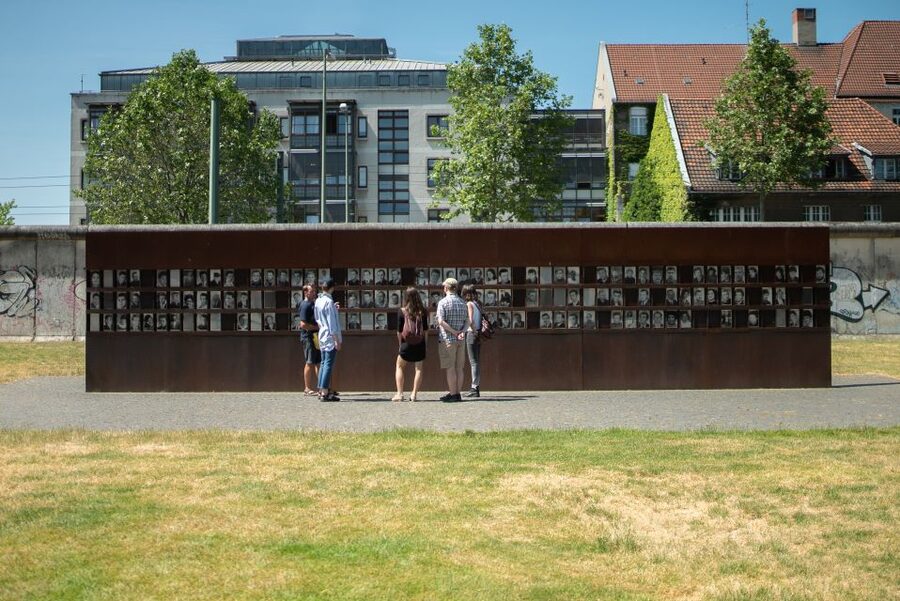
At $18 per person for a 3-hour guided tour, the value is strong for two reasons. First, you’re paying for professional English-speaking guidance that connects multiple sites into a single story. Second, you’re seeing several high-demand locations without having to figure out the route and sequencing yourself.
Two cost caveats are worth noting. Public transport tickets are not included, and you need the AB day pass for travel between sites. Also, food and drink are not included, so plan to eat before or after. The tour is tight, and you do not want to be hunting for snacks mid-walk.
What you should not expect: this is not a full-day deep dive into every era of Berlin. It’s more like a focused arc. That’s not a drawback if you’re using it as your foundation. For many visitors, it also pairs well with other Berlin neighborhoods later, because you’ll have a framework for what you’re looking at.
Who this tour is best for
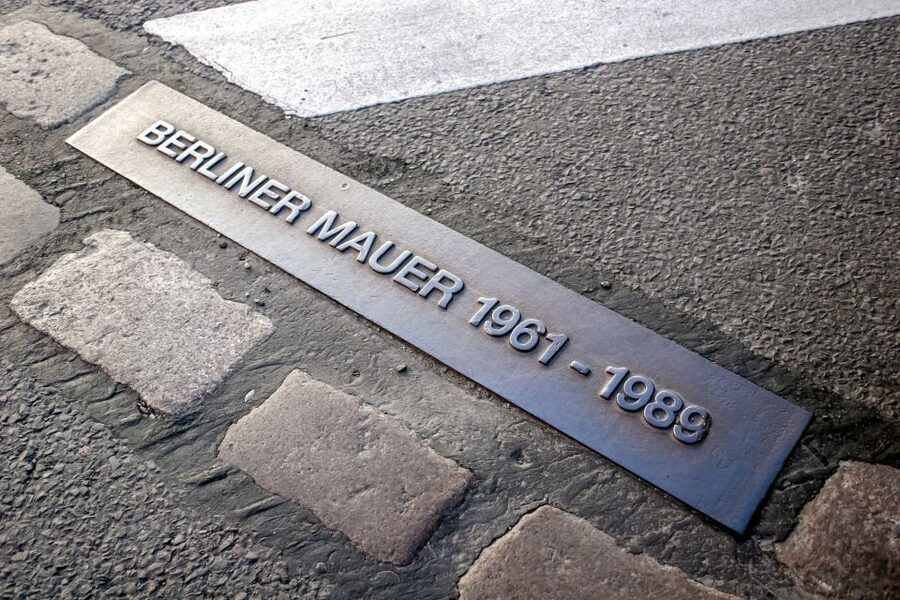
This is a good fit if you like history with a spine. You want the Cold War explained through places like Tränenpalast, Karl-Marx-Allee, the Wall area, and the East Side Gallery, not through vague summaries. It also works well if you enjoy a mix of city walking and storytelling, because the route changes pace and setting, from boulevard to square to Wall.
You’ll likely enjoy it most if you:
- want clear context for the Berlin Wall era
- like asking questions and getting direct answers
- appreciate architecture as a form of political messaging
- prefer small-group energy and a guide who keeps the narrative moving
If you’re someone who wants long museum time, you might feel the stops are too brief. On the flip side, the short segments are also what make it doable for a half-day schedule.
Should you book Cold War, Berlin Wall, Spies, and the East Side Gallery?
If you want a short Berlin history outing that teaches you how division shaped daily life, book it. The biggest win is the guided storytelling plus the site selection, especially the serious Wall context followed by the East Side Gallery transformation. The guide quality is a standout theme, with many named guides praised for bringing the period to life, handling questions, and keeping the group engaged.
Just go in prepared for the practical parts: bring comfortable shoes, use the AB day pass for transport, and dress for weather since the tour runs in conditions you might not love. Do that, and you’ll come away with a clear, human understanding of Cold War Berlin, not just a list of landmarks.
FAQ
Where do I meet the guide?
Meet your guide outside Friedrichstraße train station, on the square beside the Tränenpalast (Palace of Tears). Look for a guide with a yellow name badge holding a yellow umbrella.
What stops are included on the tour?
You’ll visit Tränenpalast, Alexanderplatz, Karl-Marx-Allee, Friedrichshain, the Berlin Wall area (including the death strip area), and the East Side Gallery. You’ll be dropped off at Bernauer Straße.
Do I need public transport tickets during the tour?
Yes. An AB public transport day pass is required to travel between sites during the tour. You can purchase it on the day with help from the on-site staff.
How long is the tour and what is the walking like?
The tour lasts 3 hours and includes several short guided stops plus walking along the East Side Gallery and Wall area. It also includes short train rides between sections.
Is the tour wheelchair accessible?
Yes, the tour is listed as wheelchair accessible.
Is food included?
No. Food and drink are not included, so plan to grab something before or after the tour.
Museums Worth the Queue in Berlin
The Divided Years, Reviewed
Following the Wall a Little Further
Everything else we filed on Berlin
- East Berlin: City of Shadows Walking Tour
★ 5.0 · 11 reviews - Berlin: Die Stachelschweine – Frank Lüdecke – Träumt Weiter
★ 4.7 · 11 reviews - Potsdam Day Trip from Berlin with a Local: Private & Personalized
★ 4.0 · 11 reviews - An Introduction to Berlin Walking Tour
★ 5.0 · 11 reviews - DJ for a Day: Learn to Mix Like a Pro in Berlin
★ 5.0 · 11 reviews - 2-H Segway Sightseeing Tour Berlin
★ 4.5 · 11 reviews
Berlin Wall and Divided City Tours, side by side.
 ★ 4.8Nuremberg: Tunnels and Secret Passages in the City Wall TourFrom $142,334 reviews
 ★ 4.1Skip-the-Line: Berlin Wall Museum at Checkpoint CharlieFrom $212,041 reviews
 ★ 4.0Berlin: East Side Gallery Spree Cruise in a Solar CatamaranFrom $271,039 reviews
 ★ 5.0Cold War, Berlin Wall, Spies and the East Side GalleryFrom $181,024 reviews
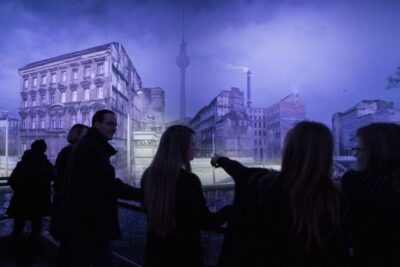 ★ 4.5THE WALL: asisi Panorama Berlin TicketFrom $16580 reviews
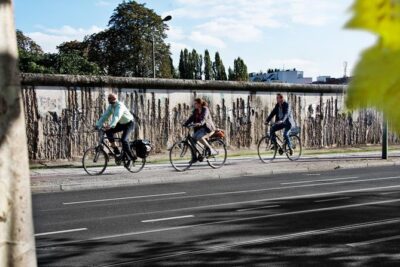 ★ 4.7Berlin: Guided Bike Tour of the Berlin Wall and Third ReichFrom $40499 reviews
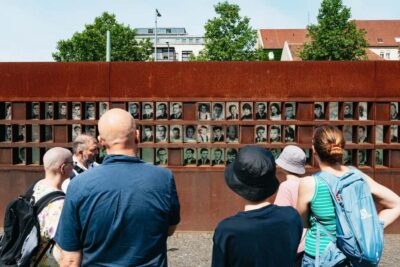 ★ 4.8Berlin: Cold War Walking Tour on Berlin Wall RouteFrom $26437 reviews
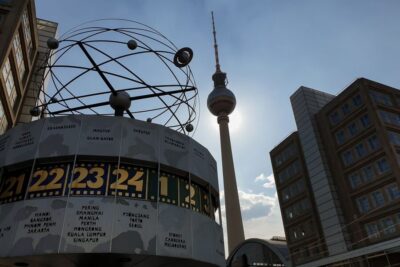 ★ 4.9East Berlin and the Wall: Walking TourFrom $351407 reviews
Other lists this tour is on