
REVIEW · COLD WAR BERLIN
Hitler to Stalin – WWII & Cold War Tour (Small Group)
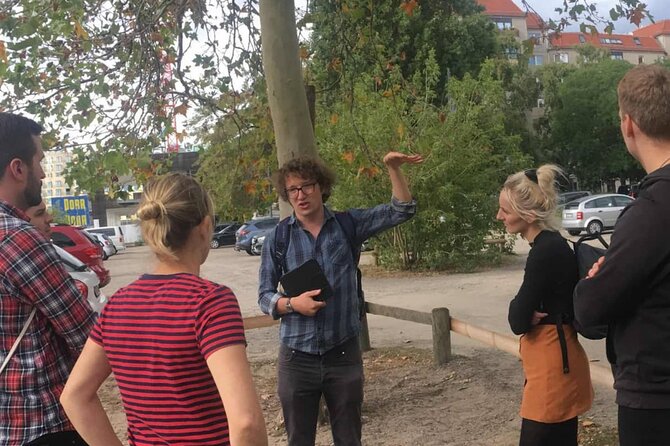
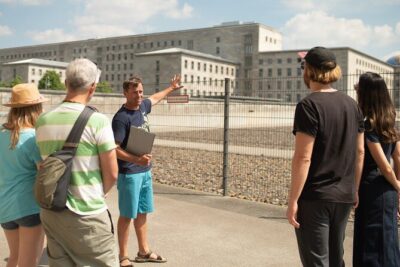
Berlin history feels personal on foot. This small-group tour connects the arc from Nazi rule to the Cold War in real city space, with expert guides who bring the story to life. I like the pace for a 2.5-hour walk, and I love how guides such as Mark use photos to show what places looked like in wartime versus today. One drawback to plan for: you will be walking outdoors for a while, so comfy shoes matter, and good weather is required.
What makes this route compelling is that it is not just a list of famous monuments. You start at the Brandenburg Gate, then move through government ruins, Soviet memory, Holocaust remembrance, Hitler’s last command bunker, and key moments of East German resistance, before finishing at Checkpoint Charlie. Along the way, you get the kind of cause-and-effect thinking that helps Berlin’s story finally click.
At a price point like $23 for a guided small group (max 15), you are mostly paying for the human context, not museum entrances. And because many stops are ticket-free, the tour is a strong value if you want meaning without stacking extra costs.
In This Review
- Key things that make this Berlin WWII and Cold War walk work
- Starting at Brandenburg Gate, where Germany’s story turns outward
- Reichstag Building: the parliament that survived fire, then was restored
- Soviet memory in Tiergarten: a monument with a specific story
- Holocaust Memorial: uncertainty built into the design
- Fuhrerbunker: the last command and the dates that land like bricks
- A quick Korea reality check in Mitte
- June 17, 1953: East German unrest and the cost of dissent
- Berlin Wall Memorial: the split you can still feel
- Checkpoint Charlie: where the Cold War became theater
- Price and value: what $23 buys you in Berlin
- What to expect on the ground, and how to prepare
- Who this tour suits best
- Should you book this Berlin WWII and Cold War tour?
- FAQ
- How long is the Hitler to Stalin WWII & Cold War Tour?
- How many people are in the small group?
- Where do I meet and where does the tour end?
- Do I need to buy tickets for the stops?
- Do I need a mobile ticket?
- What if the weather is bad?
Key things that make this Berlin WWII and Cold War walk work
- A tight 2.5-hour timeline from the Brandenburg Gate to Checkpoint Charlie, so you get the big story without getting lost.
- WWII to Cold War is told in sequence, using landmarks you can actually see and connect with your own eyes.
- High-impact stops with clear emotional purpose, especially the Holocaust Memorial’s design choices.
- Concrete war details, not vague talking points, including the Fuhrerbunker dates tied to Hitler and Eva Braun.
- Good chance of a standout guide like Mark, who uses photos and answers questions in a way that sticks.
- Mostly ticket-free monument stops, which keeps your day focused and budget-friendly.
More of the divided city, written up in full
- Berlin: Third Reich and Cold War 2 Hour Walking Tour★ 4.9 · 6,830 reviews
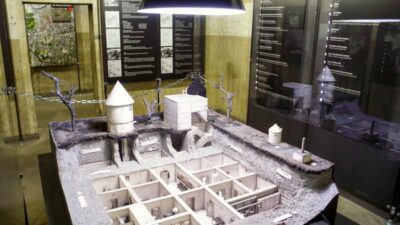
- Berlin: Berlin Story Bunker Entry Ticket★ 4.6 · 6,759 reviews
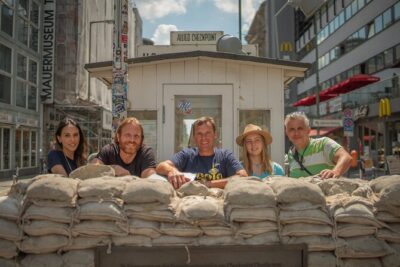
- Berlin’s Best: 2 Hour Walking Tour Third Reich and the Cold War★ 5.0 · 5,486 reviews
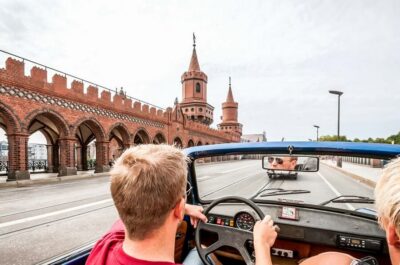
- Berlin: 75-minute Trabi Safari★ 4.8 · 2,854 reviews
Starting at Brandenburg Gate, where Germany’s story turns outward
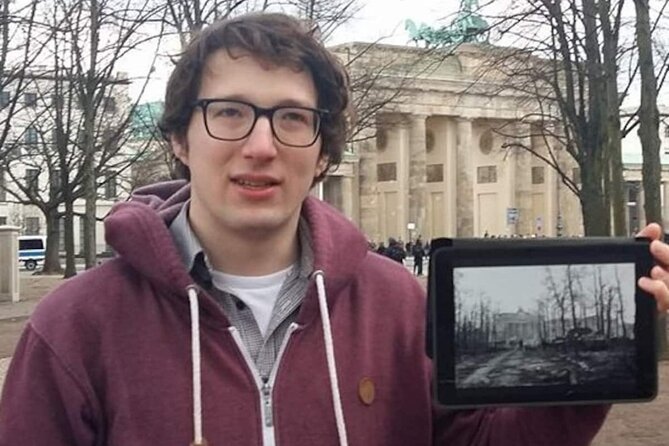
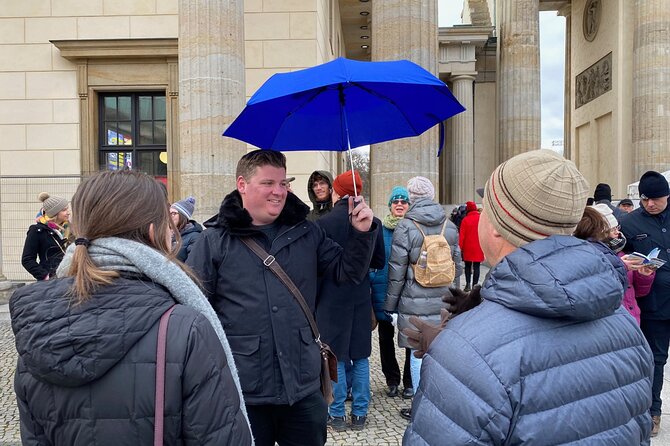
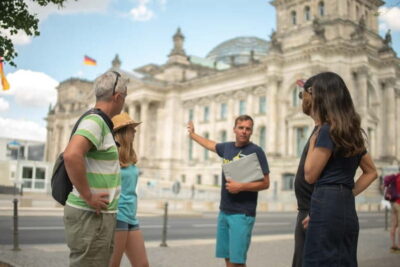
Your walk begins at the Brandenburg Gate, by Pariser Platz. Built in the 18th century, it has always been positioned at a crossroads of power and public life, right near the Reichstag area.
For me, the smartest part of starting here is that the Gate is more than scenery. It is a political symbol that has been pulled into major events over time, and today it often reads as a sign of European unity and peace. That contrast is a good mental warm-up before you hit the darker chapters.
You’ll spend about 10 minutes here, and because the site area is free to enter, you can focus on what the guide is connecting rather than waiting around.
Reichstag Building: the parliament that survived fire, then was restored
Next comes the Reichstag Building, where Germany’s Bundestag meets. The building dates to 1894, and it originally housed the Imperial Diet, the political body of the German Empire.
In WWII and its aftermath, the Reichstag becomes a lesson in both destruction and rebuilding. It was badly damaged after 1945, then fully restored in 1999, so you are looking at a modern political landmark with a scarred past.
Plan for about 15 minutes. This is one of those stops where the explanation matters, because you are not reading the building like a museum exhibit. You are learning why it became such a loaded place for power.
Soviet memory in Tiergarten: a monument with a specific story
Stop three is the Soviet War Memorial in the Großer Tiergarten. The Soviet Union erected it in 1945 to commemorate Soviet Armed Forces soldiers who died in the Battle of Berlin.
This location sits in a big city park, which can make it easier to miss if you are not paying attention. The guide’s job here is to point out how monuments can function as political language, not just commemoration, especially when they appear in the middle of everyday Berlin life.
You’ll typically get around 15 minutes. It is a short stop, but it gives you an important angle on how Berlin’s WWII ending was not the same story for everyone who lived it.
Holocaust Memorial: uncertainty built into the design
Then comes the Memorial to the Murdered Jews of Europe, designed by Peter Eisenman. It was created in 1999, and the setup matters: 2,711 concrete slabs laid across a site of about 19,000 square meters.
What makes this stop hit hard is the physical experience. The slabs create uneven footing and an environment where you can feel uncertainty, even disorientation, because the space does not behave like a straight path. The openness and abstraction mean you are invited to confront the subject in your own way, without a single guided script telling you what to feel.
Expect about 15 minutes. If you are sensitive to heavy content, you might want to prepare mentally. This stop is not about trivia. It is about memory, and the design does part of the work for you.
Further wartime history walks we have written up
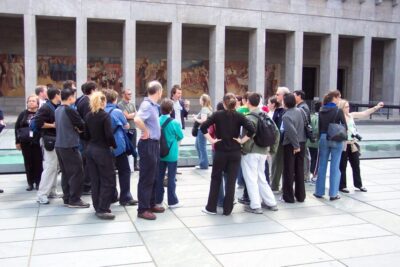
Fuhrerbunker: the last command and the dates that land like bricks
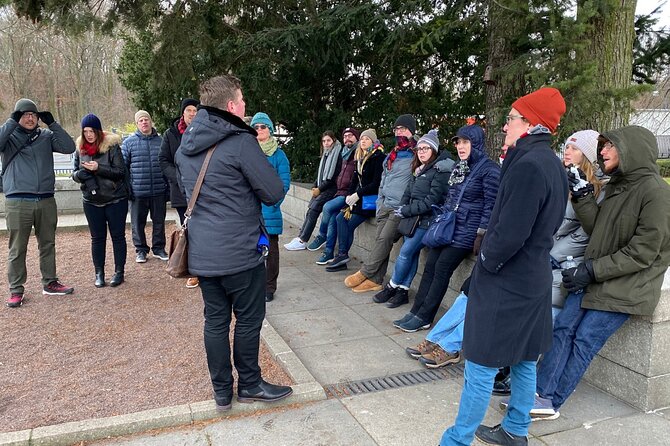
Next is the Fuhrerbunker, Hitler’s air-raid shelter and the last site of his headquarters. During WWII it sat underground, and after the old Chancellery buildings were leveled by the Soviets, the underground complex remained mostly undisturbed until 1988.
Here the details are especially important because they connect a timeline of personal decisions to the collapse of the regime. Hitler took over the Fuhrerbunker on January 16, 1945, and he married Eva Braun on April 29, 1945, less than 40 hours before their suicide.
You’ll get about 15 minutes. This is not the kind of stop where you should expect a big exhibit. It is a place where the guide helps you understand what it meant to have leadership operating from a bunker while the city fell around them.
A quick Korea reality check in Mitte
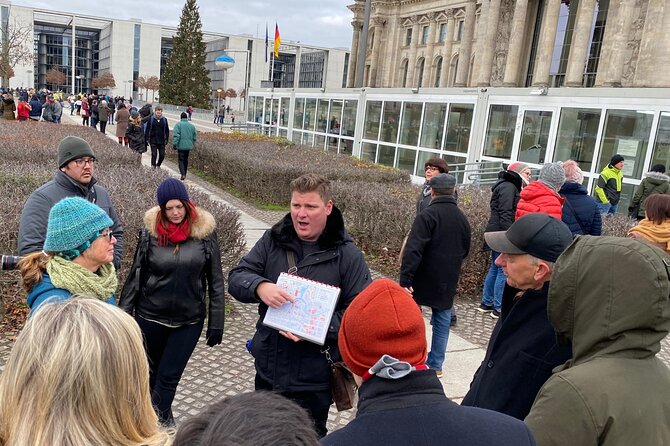
One of the more unusual stops is the Embassy of the Republic of Korea, the DPRK embassy, in Mitte. The address is Glinkastraße 5, and this stop gives you a Cold War echo that still shapes Berlin today.
This part of the walk is about context: Berlin was the frontline city where rival systems competed openly, and those rivalries did not fully vanish with reunification. Even if the physical stop is brief, the location helps you see how political tensions can persist across decades.
Expect around 10 minutes. It is the kind of moment where your guide can connect global Cold War tensions to the Berlin you are walking through.
June 17, 1953: East German unrest and the cost of dissent
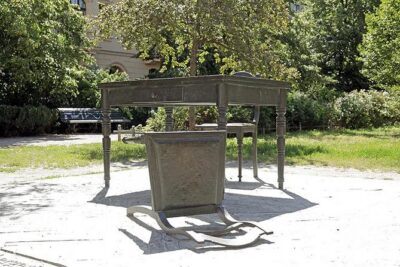
Stop seven focuses on the memorial for the uprising on June 17, 1953. This was the first major challenge to the communist regime after the war, and it was suppressed by Soviet tanks.
About 15,000 people were arrested after the incident, so you get a sense of how quickly political pressure can turn into a crackdown. The memorial is a reminder that communism in the East did not face only passive opposition. It faced people in the streets, and that mattered.
This stop usually takes about 15 minutes. If you want to understand the Cold War as something lived by ordinary people, this is a key place to pause.
Berlin Wall Memorial: the split you can still feel
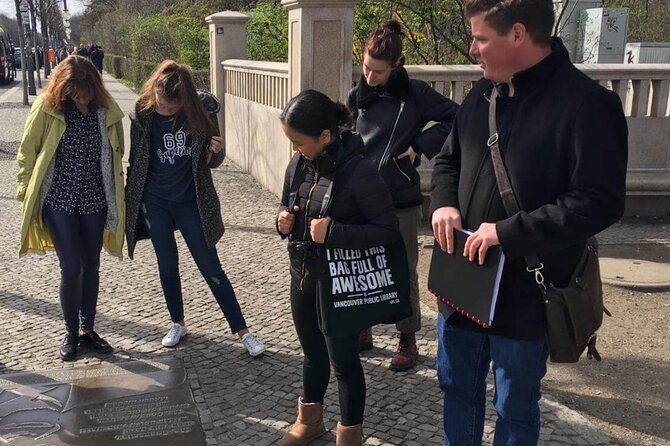
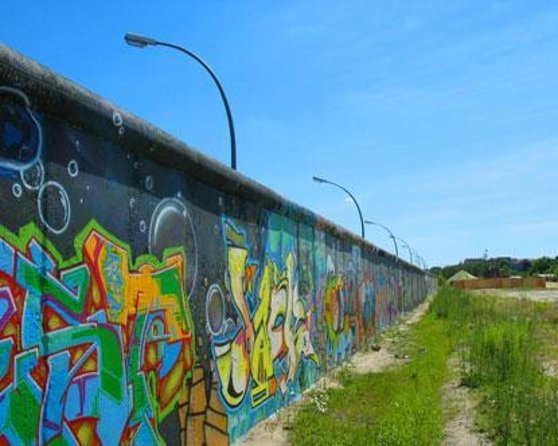
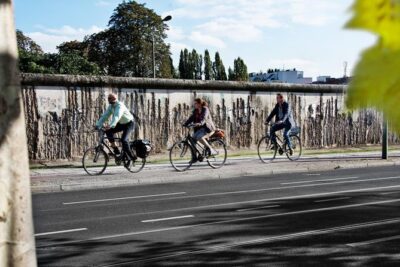
Next is the Memorial of the Berlin Wall. It marks the division of Berlin and the deaths that occurred there.
The value of this stop is that it brings the story back to human stakes. The Wall was not just an idea of separation. It was a daily barrier that could mean danger, loss, and desperate choices.
You’ll spend about 15 minutes. The guide’s framing makes a difference here, because you are walking through a city that looks unified from many angles, while the memorial keeps the historical reality front and center.
Checkpoint Charlie: where the Cold War became theater
You finish at Checkpoint Charlie, often described as the most famous place where the Berlin Wall separated East and West Berlin. During the Cold War, Western Allies called it Checkpoint C.
This stop works well at the end of the route because you have already built the timeline in your head. Now you can see why this location became a symbol: it was a controlled crossing point where political tension could become very visible.
You typically get around 20 minutes here. And because the meet-up ends in this area, it is also a practical place to regroup, take photos, and plan how you want to continue the day on your own.
Price and value: what $23 buys you in Berlin
At $23 for about 2 hours 30 minutes in a small group (up to 15 people), this is a good value if you care about understanding rather than just collecting photos.
A big reason is that many of the stops are listed as admission ticket free, which means you are not paying again and again for entrances. Instead, your money goes toward the guided walk and the connections between WWII events and Cold War developments, using landmarks you can actually stand next to.
Also, the mobile ticket is a practical touch. It keeps the day smooth so you spend your time on the story, not on paperwork.
What to expect on the ground, and how to prepare
This is a walking tour. The duration is about 2 hours 30 minutes, and the route moves through multiple outdoor stops, most around 10 to 20 minutes each.
It also depends on good weather. If conditions are poor, it may be rescheduled or refunded, so I suggest you check the forecast the day before and dress for Berlin conditions.
Good news: service animals are allowed, and it is described as suitable for most travelers. It also runs near public transportation, so you can get to the start point at Pariser Platz and then finish near Friedrichstraße 43 to 45.
Who this tour suits best
This tour is a strong match if you want a guided, chronological feel for Berlin’s WWII to Cold War story. It works especially well if you like learning through places, not only through indoor museums.
It also fits travelers who have limited time. Two and a half hours can give you real bearings, because you leave with a clear mental map, from symbols like the Brandenburg Gate to the more chilling specifics like Hitler’s Fuhrerbunker timeline.
If you want a light, casual history chat, this might feel too heavy at points. The Holocaust Memorial and WWII-related stops bring real emotional weight, and the guide treats them seriously.
Should you book this Berlin WWII and Cold War tour?
If you are in Berlin for a short stay and want the story connected, yes, book it. The format is built for understanding, and the small group size helps the guide keep the pace human instead of rushing.
I would especially recommend it if you value strong guiding. Feedback highlights guides who are animated, thorough, and able to answer questions, with photos that help you picture wartime Berlin beside what you see now.
The main reason to hesitate is simple: it is outdoors and it runs on the weather. If you hate walking or you are visiting on a day when rain and wind are likely, you may want a backup plan.
FAQ
How long is the Hitler to Stalin WWII & Cold War Tour?
It is approximately 2 hours 30 minutes.
How many people are in the small group?
The tour has a maximum of 15 travelers.
Where do I meet and where does the tour end?
You start at the Brandenburg Gate, Pariser Platz, 10117 Berlin, and you end at Checkpoint Charlie, Friedrichstraße 43-45, 10117 Berlin.
Do I need to buy tickets for the stops?
The tour info lists Admission Ticket Free for each stop.
Do I need a mobile ticket?
Yes, the tour includes a mobile ticket.
What if the weather is bad?
The tour requires good weather. If it is canceled due to poor weather, you will be offered a different date or a full refund.
Wartime History Walks We Have Reviewed
The Divided Years, Reviewed
Everything else we filed on Berlin
- Private Photo Tour in Kreuzberg
★ 5.0 · 3 reviews - Kreuzberg Private Walking Tour: Immigrants, Artists & Hipsters
★ 5.0 · 3 reviews - Berlin’s Jewish Heritage: Private Tour of the Vibrant Jewish District
★ 5.0 · 3 reviews - Individual city tour Berlin for max. 8 persons
★ 5.0 · 3 reviews - Berlin & The Third Reich Private Guided Tour
★ 5.0 · 3 reviews - Private Analogue Photography Experience in Berlin
★ 5.0 · 3 reviews
Cold War and Stasi History Tours, side by side.
 ★ 4.9Berlin: Third Reich and Cold War 2 Hour Walking TourFrom $236,830 reviews
 ★ 4.6Berlin: Berlin Story Bunker Entry TicketFrom $216,759 reviews
 ★ 5.0Berlin’s Best: 2 Hour Walking Tour Third Reich and the Cold WarFrom $245,486 reviews
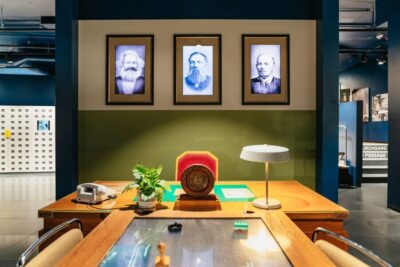 ★ 4.3Berlin: DDR Museum TicketsFrom $153,443 reviews
 ★ 4.8Berlin: 75-minute Trabi SafariFrom $932,854 reviews
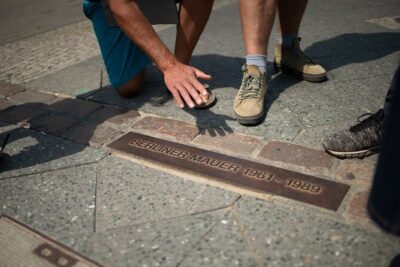 ★ 5.0Cold War, Berlin Wall, Spies and the East Side GalleryFrom $181,024 reviews
 ★ 4.8Nuremberg: Historischer Kunstbunker WWII Art Bunker TourFrom $14921 reviews
 ★ 4.9Leipzig: 90-Minute Trabi City TourFrom $81728 reviews
Other lists this tour is on