
REVIEW · COLD WAR BERLIN
Hitler to Stalin – WWII & Cold War Tour (Small Group)
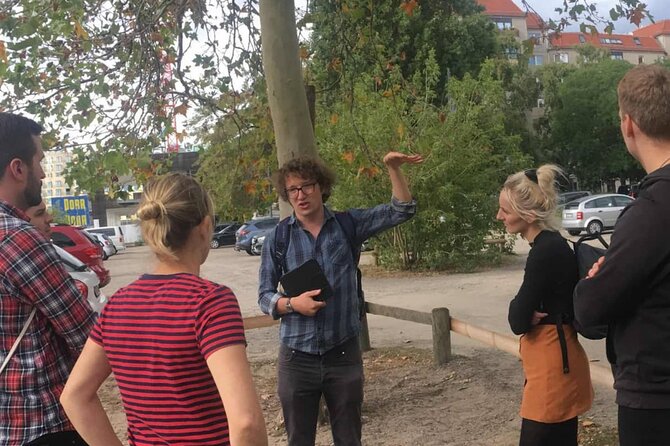
Berlin changes your view of the twentieth century. On this WWII and Cold War small-group walk in Berlin, I like how you do not just read history, you stand on the streets where it unfolded. I also love that the pacing stays focused and human, with passionate historians and real context tied to major landmarks like the Reichstag, Checkpoint Charlie, and the Berlin Wall.
There is one practical consideration: it is a 2.5-hour, rain or shine walk. You will want comfortable shoes and you may need an umbrella, because this is about moving between sites, not sitting in a museum all day.
In This Review
- Key points worth knowing before you go
- The 2.5-hour format that actually works
- Starting at the Brandenburg Gate, and how Berlin signals change
- Hitler’s bunker and Gestapo HQ: power with a long shadow
- The Reichstag: where politics meets the physical city
- The Holocaust Memorial: learning, remembering, and staying present
- Checkpoint Charlie: the Cold War made walkable
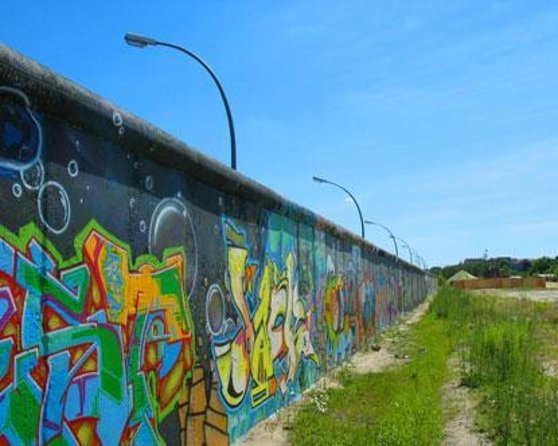
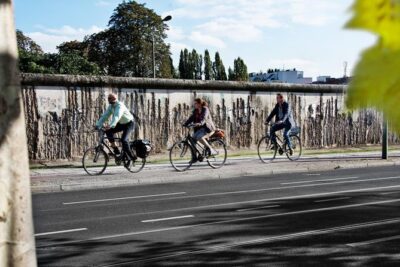
- The Berlin Wall and the Iron Curtain idea, made concrete
- Why those “Then and Now” photos and maps matter
- How good is the guide support in a real-world way?
- Price and value: is $34 a fair deal?
- Who this tour fits best
- What to bring so you enjoy it
- Should you book this WWII and Cold War tour?
- FAQ
- How long is the Hitler to Stalin tour?
- Where do I meet the tour guide?
- What is the tour language?
- Is the tour wheelchair accessible?
- Does the tour run in bad weather?
- What should I bring?
- What sites are included on the route?
- Can I get a refund if I cancel?
Key points worth knowing before you go
- Two eras, one city: You connect Nazi power, terror, and collapse to the Cold War’s division and later unification.
- Real landmarks, not just photos: You see places tied to Hitler’s bunker area, the Gestapo, the Reichstag, the Wall, and Checkpoint Charlie.
- Then and Now support: You get photographs and maps that help you see what changed, and what stayed eerie and recognizable.
- A small-group feel: Less crowd noise, more chance to ask questions and keep the story coherent.
- Respectful stopping points: You include the Holocaust Memorial and treat it as more than a photo stop.
- English live guide, wheelchair accessible: Live guidance in English plus an accessible route.
More of the divided city, written up in full
- Berlin: Third Reich and Cold War 2 Hour Walking Tour★ 4.9 · 6,830 reviews
- Berlin: Berlin Story Bunker Entry Ticket★ 4.6 · 6,759 reviews
- Berlin’s Best: 2 Hour Walking Tour Third Reich and the Cold War★ 5.0 · 5,486 reviews
- Berlin: 75-minute Trabi Safari★ 4.8 · 2,854 reviews
The 2.5-hour format that actually works
This tour is built for people who want more than a hit list. In 2.5 hours, you cover a lot of ground, but you still get a sense of cause and effect, from the late WWII story into Cold War Berlin. The small-group setup matters here. It keeps the atmosphere serious without feeling rigid, and it helps the guide keep moving without rushing the important parts.
I like that it is not framed as a political lecture only. You get a mix of state power and street-level reality. That is how Berlin earns its reputation. The city keeps showing you the fingerprints of what happened here.
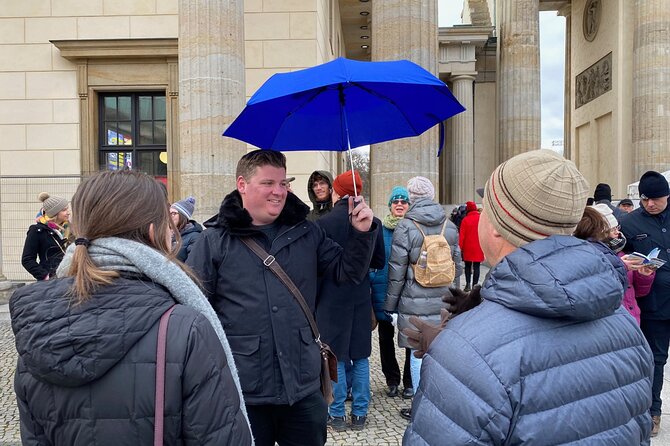
Also, your time starts at a smart anchor point: the Tourist Center at the Brandenburg Gate, and you look for a blue umbrella. That makes it easy to find and helps you get oriented before you walk into the heavier themes.
Starting at the Brandenburg Gate, and how Berlin signals change
Your route begins at the Brandenburg Gate, a place people love for photos. Here, it gets treated like a hinge in the story of Berlin itself. The guide uses it as a transition point: war-torn scars give way to a symbol of unity, even though unity did not arrive cleanly or quickly.
Why this stop works: it sets a mindset. Berlin is not just a city of ruins. It is a city of arguments, rebuilding, and competing versions of the future. When you begin there, the rest of the tour makes sense faster.
Practical tip: before you move on, take 30 seconds to scan the area. Even without trying to memorize details, just knowing where you are in relation to the center helps later when you see the Wall and border-themed sites.
Hitler’s bunker and Gestapo HQ: power with a long shadow
As the tour moves into the Nazi period, you do not just see names on plaques. You walk the areas linked to fear and control. Stops connected with Hitler’s bunker and the Gestapo HQ bring the story down to mechanisms, not just ideology. The point is to show how terror was organized and enforced, and how it shaped everyday life.
Here is what I think you will appreciate: the guide keeps reminding you that these systems were not abstract. They were run through people, buildings, and decisions. That is a key difference between reading history and walking it.
A drawback to keep in mind: this is emotionally heavy material. If you prefer light sightseeing only, this tour will feel intense. But if you want to understand how Berlin became what it is, you need stops like these. They explain why the city later treated freedom like something that had to be defended.
The Reichstag: where politics meets the physical city
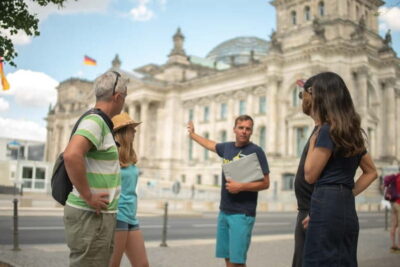
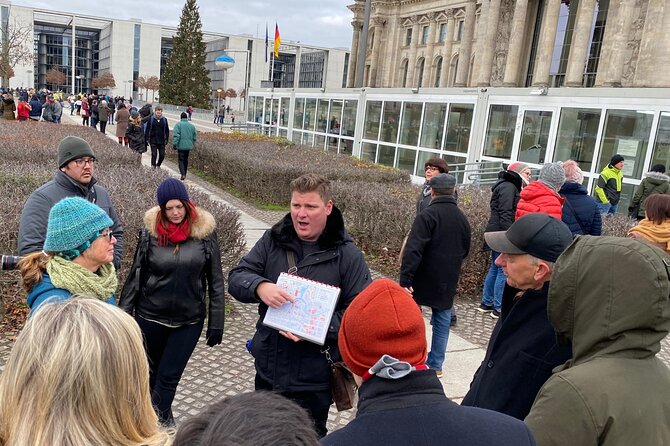
Next is the Reichstag, often photographed for its modern look. On this tour, you are guided to understand its politics and why it became such a powerful symbol. This is where you start seeing architecture as a character in the story.
Why it is worth your time: the Reichstag represents more than a government building. It represents the struggle over who gets to define Germany’s direction, and how those definitions can turn destructive. In Berlin, those power struggles did not stay inside offices. They played out in streets, borders, and lives.
If you like history explained in plain language, you should like this part. The stop is used to connect ideas to places, so you are not left with a vague sense that politics happened somewhere offstage.
Further wartime history walks we have written up
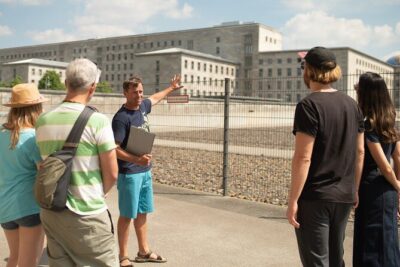
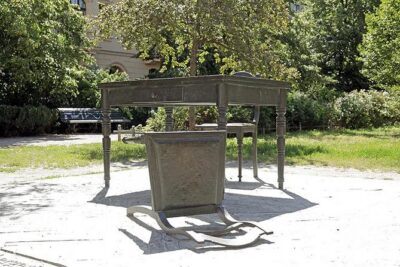
The Holocaust Memorial: learning, remembering, and staying present
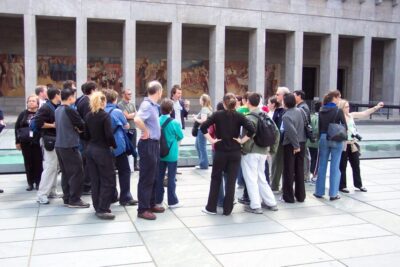
Then you reach the Holocaust Memorial. This is not treated like a quick checkpoint. It is an intentional moment on the route to consider the loss and lessons from the Nazi era.
I appreciate tours that handle this stop with care, because people often make the mistake of turning remembrance into an Instagram detour. The value here is that the guide frames what you are looking at and helps you think about the scale of what happened without turning it into sensationalism.
Practical advice: give yourself a few minutes to slow down. Wear shoes you can stand in comfortably. If you rush through, you will miss the point of the memorial’s design, and you will feel that tug of unease without understanding why.
Checkpoint Charlie: the Cold War made walkable
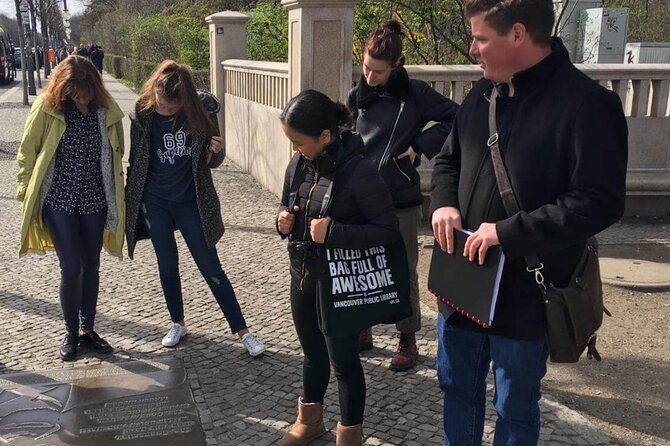
Now you shift to the Cold War era. Checkpoint Charlie is where the story becomes physical and immediate. Even if you know the basics, standing near the border-themed area helps you grasp what division meant day to day.
What I like about this segment is the emotional contrast. Berlin after the war is not just a backdrop. It is a tense place where politics is visible in movement and barriers. The tour gives you the sense of a city that is both normal and controlled at the same time.
If you want practical photo guidance: think of your photos as context shots, not just selfies. Capture the idea of the border and the streets around it, then you will remember the tour story better later.
The Berlin Wall and the Iron Curtain idea, made concrete
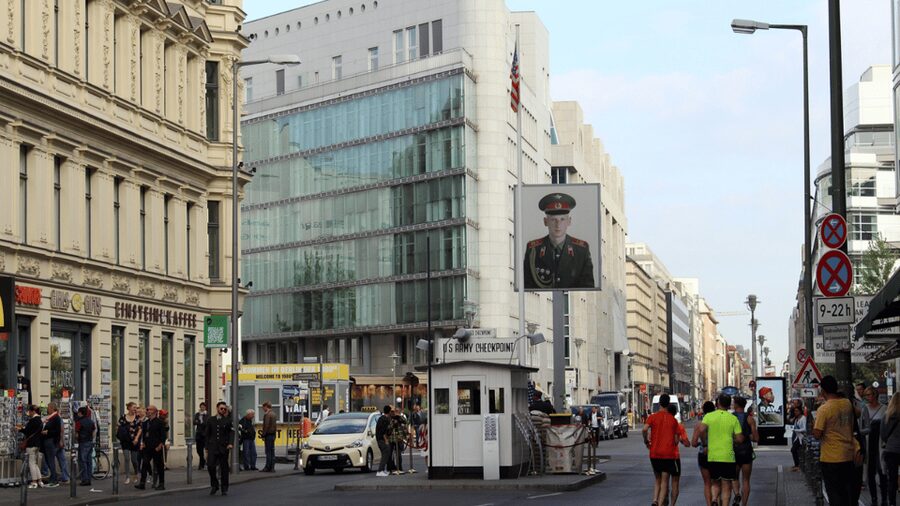
The Berlin Wall is the center of this portion of the tour. You get to view the Wall as an actual landmark, not an old documentary image. The guide also frames it as an Iron Curtain in real time, meaning you are encouraged to connect the concept of division to what walls change in human terms.
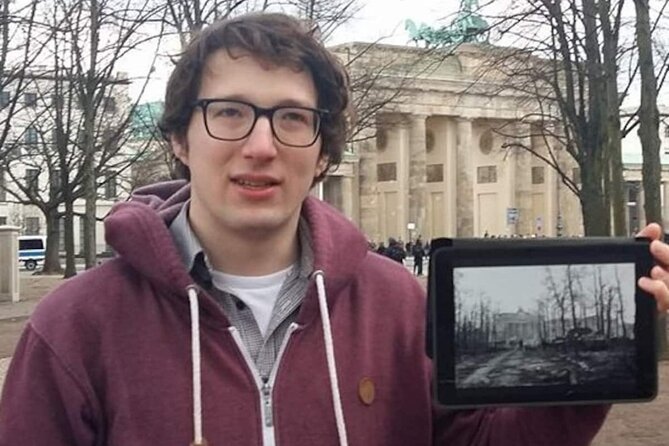
This is also where the tour’s “Then and Now” tools really help. You get photographs and maps that make the comparison clearer. Seeing Berlin before and after, right where you are standing, can be one of the fastest ways to understand how cities get reshaped by politics.
What you might notice: Berlin does not just have one Wall moment. The city has layers of reminders. So even if the Wall segment you can see is limited compared with what existed, the explanations help you fill in the bigger pattern.
Why those “Then and Now” photos and maps matter
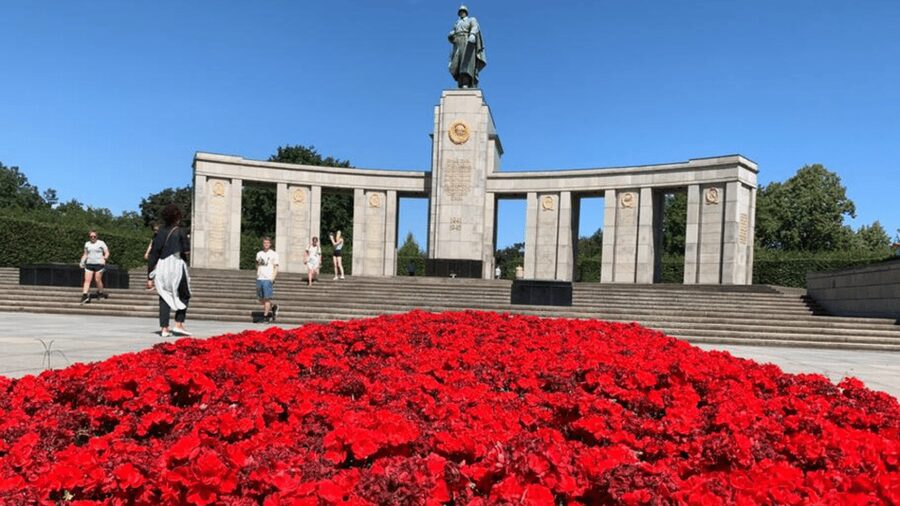
A lot of tours toss in a few historical images. Here, the photos and maps are used to teach your eyes how to read the city. You start noticing details you would otherwise miss, like how certain areas transitioned from war-era scars to later political symbolism.
I like that this is not just visual. It is interpretive. You are learning how Berlin changed over time because of WWII events, and then how that division evolved into a new kind of conflict and pressure.
In a small group, you also get a better chance to ask questions. That helps if you are the type who wants to reconcile what you thought you knew with what you are seeing now.
How good is the guide support in a real-world way?
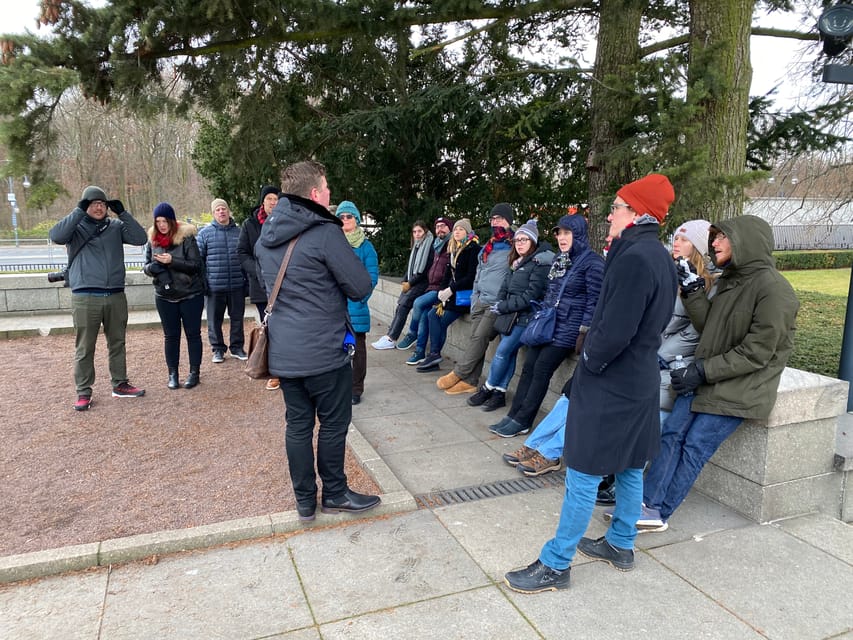
The tour is guided by live English historians, and the format is built around being interactive enough to keep you engaged. One review highlighted Tom as excellent, with knowledge, interest, and strong engagement with the group. That kind of guide energy matters on this topic, because it is easy to make heavy history feel either dull or overly scripted.
Also, the tour is described as run by Berlin’s only World War II tour specialists. Even if you only half believe that kind of claim, the takeaway is useful: the storytelling focus stays on WWII and the Cold War, and that helps you avoid the feeling of getting a generic “Berlin greatest hits” walk.
Price and value: is $34 a fair deal?
At $34 per person for about 2.5 hours, the price feels reasonable for what you get. You are paying for a live guide, a small-group experience, and the inclusion of multiple major WWII and Cold War sites in one logical arc.
The value comes from two things:
- Concentration of stops: You cover major landmarks that would take time to organize yourself, especially if you are trying to connect WWII to the Cold War rather than treat them as separate trips.
- Guided interpretation: The photos, maps, and guided explanations help you understand why each site matters. If you walked these on your own, you could certainly see the locations, but you might not connect the timeline as clearly.
If you are the type who loves planning but hates losing time, this tour can save you that headache. If you already know the whole timeline, it might feel a bit more structured than you want. But for most people, it hits a sweet spot.
Who this tour fits best
This tour is a strong match if you want:
- A small-group Berlin walk with a clear WWII to Cold War storyline
- Major landmarks like the Reichstag, the Holocaust Memorial, the Berlin Wall area, and Checkpoint Charlie
- A guide who can explain politics and human impact in the same breath
It may not be ideal if you:
- Want a mostly light, casual sightseeing day
- Do not handle heavy historical themes well
- Expect lots of time inside buildings (this is a street-and-landmark walking format)
What to bring so you enjoy it
Since it runs rain or shine, pack for weather and walking. I recommend:
- Comfortable shoes
- Water and light snacks
- An umbrella or raincoat
You will feel better if you start hydrated and not hungry. The tour is short enough that meals can be too far away to rely on later, so snacks make sense.
Should you book this WWII and Cold War tour?
I think you should book if you want Berlin to make sense beyond postcards. The best part is the timeline connection: Nazi Germany’s terror and power dynamics, then the Cold War’s division, then how the city changed afterward. You also get practical support in the form of photographs and maps, so you are not just hearing facts, you are learning to see.
If you are already overwhelmed by history and want only comfort-level sightseeing, skip it. But if you are curious and ready to walk through two dark eras with a guide who can keep it organized, this is a smart use of a half-day.
FAQ
How long is the Hitler to Stalin tour?
The tour lasts about 2.5 hours.
Where do I meet the tour guide?
You meet at the Tourist Center at the Brandenburg Gate. Look for the blue umbrella.
What is the tour language?
The live tour guide speaks English.
Is the tour wheelchair accessible?
Yes, the tour is wheelchair accessible.
Does the tour run in bad weather?
Yes, it takes place rain or shine.
What should I bring?
Bring comfortable shoes, water, and light snacks. An umbrella or raincoat can help in unfavorable weather.
What sites are included on the route?
The tour covers Berlin landmarks tied to WWII and the Cold War, including the Brandenburg Gate, Hitler’s Bunker area, Gestapo HQ, the Reichstag, the Holocaust Memorial, the Berlin Wall, and Checkpoint Charlie.
Can I get a refund if I cancel?
Free cancellation is available up to 24 hours in advance for a full refund.
Wartime History Walks We Have Reviewed
The Divided Years, Reviewed
Everything else we filed on Berlin
- Private Photo Tour in Kreuzberg
★ 5.0 · 3 reviews - Kreuzberg Private Walking Tour: Immigrants, Artists & Hipsters
★ 5.0 · 3 reviews - Berlin’s Jewish Heritage: Private Tour of the Vibrant Jewish District
★ 5.0 · 3 reviews - Individual city tour Berlin for max. 8 persons
★ 5.0 · 3 reviews - Berlin & The Third Reich Private Guided Tour
★ 5.0 · 3 reviews - Private Analogue Photography Experience in Berlin
★ 5.0 · 3 reviews
Cold War and Stasi History Tours, side by side.
 ★ 4.9Berlin: Third Reich and Cold War 2 Hour Walking TourFrom $236,830 reviews
 ★ 4.6Berlin: Berlin Story Bunker Entry TicketFrom $216,759 reviews
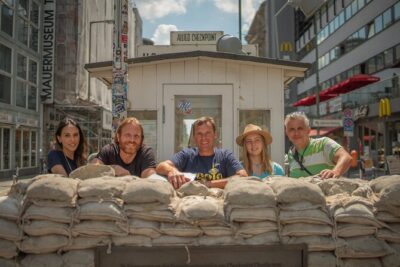 ★ 5.0Berlin’s Best: 2 Hour Walking Tour Third Reich and the Cold WarFrom $245,486 reviews
 ★ 4.3Berlin: DDR Museum TicketsFrom $153,443 reviews
 ★ 4.8Berlin: 75-minute Trabi SafariFrom $932,854 reviews
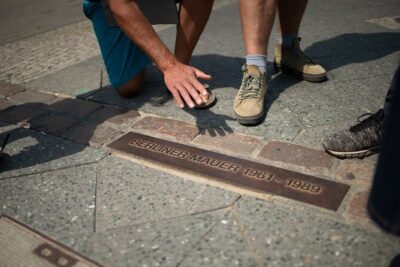 ★ 5.0Cold War, Berlin Wall, Spies and the East Side GalleryFrom $181,024 reviews
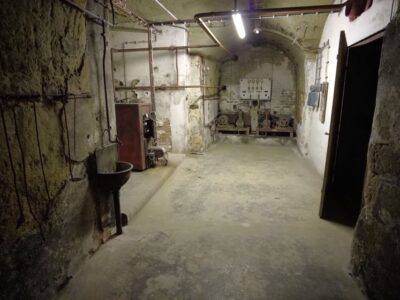 ★ 4.8Nuremberg: Historischer Kunstbunker WWII Art Bunker TourFrom $14921 reviews
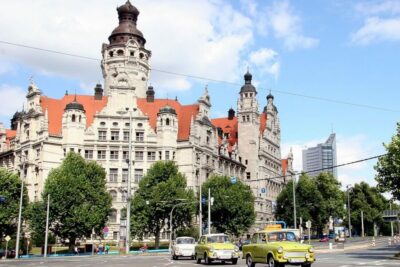 ★ 4.9Leipzig: 90-Minute Trabi City TourFrom $81728 reviews
Other lists this tour is on