
REVIEW · COLD WAR BERLIN
Private Walking Tour: World War 2 and Cold War Sites in Berlin
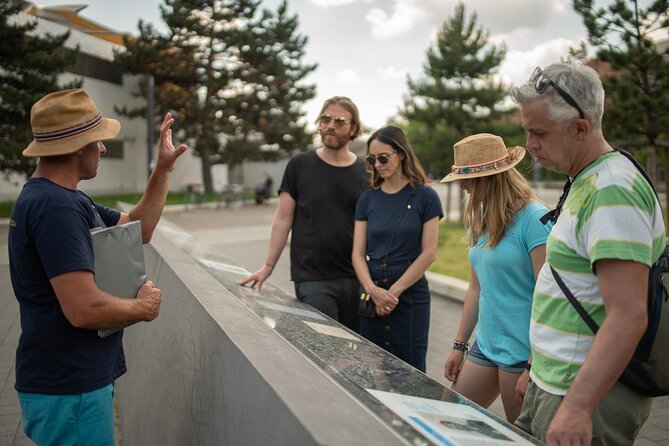
Walking Berlin’s Cold War feels personal. This private half-day tour strings together major sites like the Brandenburg Gate and Checkpoint Charlie with the stories of Nazi Germany and Cold War division. I love the customizable focus, since you can lean WW2, Cold War, or do both without being stuck on someone else’s script.
My other favorite part is the human scale: you get a dedicated guide, plus hotel pickup and drop-off, so you spend less time figuring out logistics and more time understanding what you’re seeing. One possible drawback is simple, you do a lot of walking in 3 to 4 hours, and there is no food stop included, so plan for water and snacks outside the tour.
In This Review
- Key Things I’d Prioritize On This Tour
- Private Berlin WW2 and Cold War Walking Tour: How This $192.97 Experience Works
- Reichstag and Brandenburg Gate: From Nazi Power to Postwar Symbols
- Holocaust Memorial: How 2,711 Stelae and an Underground Center Hit Different
- Nazi-Era Survivors and the Shadow of Hitler’s Bunker Area
- Topography of Terror: Where the SS, Gestapo, and SD Operated
- Checkpoint Charlie to Tränenpalast: The Cold War’s Human Friction
- Tempelhofer Feld to Bernauer Strasse Wall Memorial: Where Escape Stories Live
- East Side Gallery: When the Wall Becomes Street Art
- Choosing WW2, Cold War, or Both: Make the Tour Fit Your Trip
- Should You Book This Private Walking Tour of Berlin’s WW2 and Cold War Sites?
- FAQ
- How long is the private walking tour?
- Is this tour private, or will I be with strangers?
- Is hotel pickup and drop-off included?
- Can I customize the tour for WW2, the Cold War, or both?
- Is food or drinks included?
- Is the tour offered in English?
- Are there admission fees at the stops?
Key Things I’d Prioritize On This Tour
- A private guide you can steer, so your questions actually get answered
- Hotel pickup and drop-off, which makes a history tour feel low-effort
- Free-entry sites across the route, so your time stays on stories, not ticket lines
- A clear WW2-to-Cold War timeline, with division explained in plain language
- Memorial stops that include context, like the underground Holocaust information center
- Berlin Wall sites you can picture, including Bernauer Strasse and escape-tunnel references
More of the divided city, written up in full
- Berlin: Third Reich and Cold War 2 Hour Walking Tour★ 4.9 · 6,830 reviews
- Berlin: Berlin Story Bunker Entry Ticket★ 4.6 · 6,759 reviews
- Berlin’s Best: 2 Hour Walking Tour Third Reich and the Cold War★ 5.0 · 5,486 reviews
- Berlin: 75-minute Trabi Safari★ 4.8 · 2,854 reviews
Private Berlin WW2 and Cold War Walking Tour: How This $192.97 Experience Works
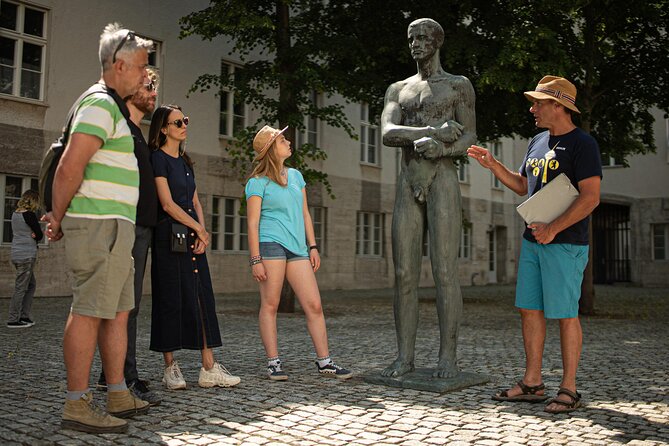
You’re paying for privacy and context. At $192.97 per person for about 3 to 4 hours, it’s not “cheap history,” but it can be good value if you like learning the why, not just the where.
This is a private walking tour, meaning it’s only your group. The guide meets you in a central Berlin hotel lobby, then you choose a morning or afternoon departure. The route is built around big landmarks, but the guide can adjust the emphasis so you are not just checking boxes.
Two practical perks matter a lot on a topic like this. First, there is hotel pickup and drop-off, so you avoid a messy start and finish. Second, the tour is in English and uses a mobile ticket, which cuts down on faffing around.
Reichstag and Brandenburg Gate: From Nazi Power to Postwar Symbols
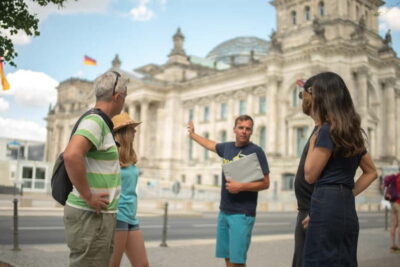
The walk often starts in the area of the Reichstag building, and that choice sets the tone. You’ll hear about World War 2 connections, including figures who opposed the Nazi regime like Claus von Stauffenberg, and stories that connect the war from Stalingrad through Berlin’s final collapse. It also sets up the idea that Berlin changed its meaning after 1945, not just its map.
Next is the Brandenburg Gate, one of Berlin’s most recognizable monuments. During the Cold War it became a symbol of division between East and West, and today it’s treated as a national symbol of peace and unity. The guide helps you read that shift, so you notice more than the photo spot.
If you care about WW2 and its aftermath, this pairing is smart. You get power and propaganda in one arc, then the postwar symbolism that replaced it. And since the tour is private, you can slow down if you want more about resistance, collapse, or how the Soviet and Allied stories were told.
Holocaust Memorial: How 2,711 Stelae and an Underground Center Hit Different
Near the Brandenburg Gate is the Memorial to the Murdered Jews of Europe, and it’s the kind of place where the details matter. The memorial uses 2,711 concrete slabs arranged in a grid, and the varying heights are meant to create a feeling of unease and disorientation. Even if you have seen photos, being there changes the experience.
Beneath the memorial is an underground information center with historical context and personal accounts. That part is key for many people, because it moves you from emotion to understanding. You do not need to be a history buff to get value here, but the center gives you grounding so the site becomes meaningful, not just heavy.
I’d treat this stop as your “turn on your brain” moment. It’s not a quick look, it’s a place you can sit with, then carry the context into the next stops about how society broke down, and how the world responded.
Nazi-Era Survivors and the Shadow of Hitler’s Bunker Area
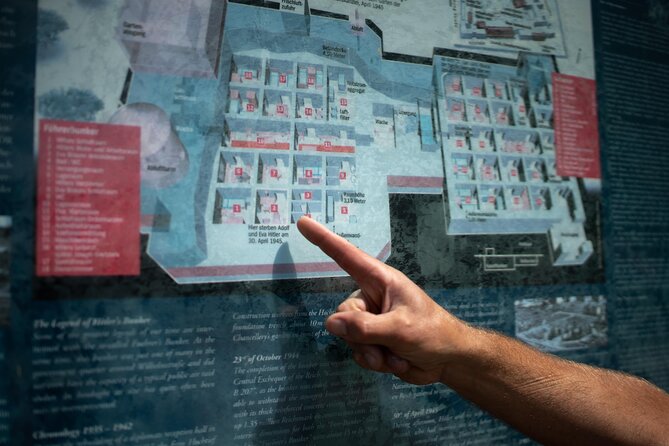
This tour doesn’t just point at monuments. It also tries to explain the machinery of the regime, then tracks what still survives today.
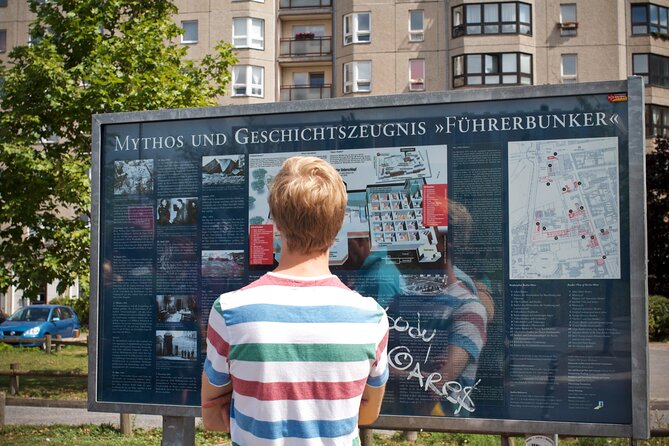
One of the stops is the Fuhrerbunker area, the infamous Hitler bunker site. The guide connects Berlin’s Nazi leadership to the way the city functioned during the war, and you’ll hear why this location became an epicenter of the Third Reich.
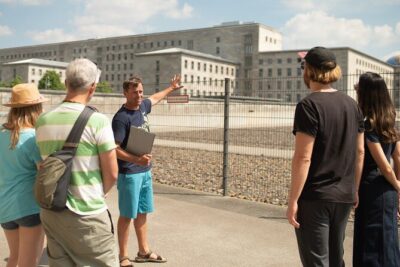
You may also visit the Aviation Ministry of Berlin, known as the Reich Air Ministry. It’s an imposing Nazi-era structure tied to Hermann Göring and the Luftwaffe. Completed in 1936, it was designed to project Nazi power, and the top-floor office offered wide views of Berlin, which the guide frames as part of the regime’s militaristic ambitions.
Here’s the value of these stops. Even when buildings are damaged or repurposed, they still carry signals. This one survived and was later reused by East Germany as the Ministry of Transport, which shows how postwar governments inherited and transformed the physical reminders.
Further wartime history walks we have written up
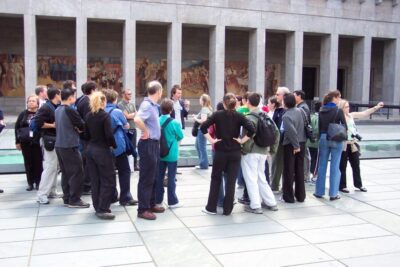
Topography of Terror: Where the SS, Gestapo, and SD Operated
If you want the Cold War story to make more sense, you also need to understand what came before it. The Topography of Terror stop is built for that.
You’ll see the former location of the HQs of the SS, Gestapo, and SD. The site today is an exhibition focused on the perpetrators and the system behind the terror. The tone is direct, and the guide helps connect the dots between ideology, policing, and everyday consequences for people in Berlin.
It’s worth pacing yourself here. This part can feel dense, because it’s about institutions, not just dates and leaders. A good private guide helps you keep the storyline straight, so you leave with clarity rather than a pile of unsettling facts.
If your guide likes to use visual aids, this is the kind of stop where a quick sketch or photo-based explanation can make the chain of events easier to hold.
Checkpoint Charlie to Tränenpalast: The Cold War’s Human Friction
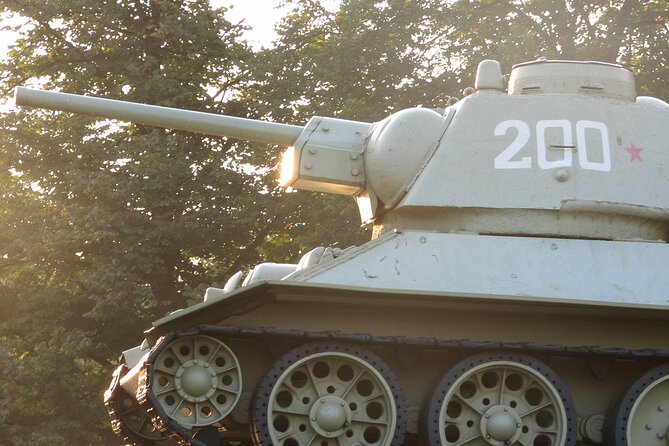
This is where Berlin stops being “history” and becomes “how daily life worked.” The route includes Checkpoint Charlie, the best-known East-West crossing point during the Cold War. You’ll hear the story behind the 1961 tank standoff between American and Soviet forces, and how that moment brought the world close to war.
The guide also shares the human side: espionage, escape attempts, and the real cost of a divided city. It’s not just about barriers. It’s about families, fear, and the high stakes of moving from one world to another.
Then comes the Tränenpalast, the Palace of Tears at Friedrichstrasse Station. Between 1961 and 1989, it served as a departure hall for East Germans crossing into West Berlin. Because travel restrictions were so strict, families often faced painful goodbyes, with many never seeing each other again. Today, a museum explains the Berlin Wall era with personal stories, which makes the emotions easier to understand instead of just imagine.
This section is ideal if you love narrative. You can connect the dots between the big iconic checkpoint and the smaller, heartbreaking reality of people trying to leave and trying to return.
Tempelhofer Feld to Bernauer Strasse Wall Memorial: Where Escape Stories Live
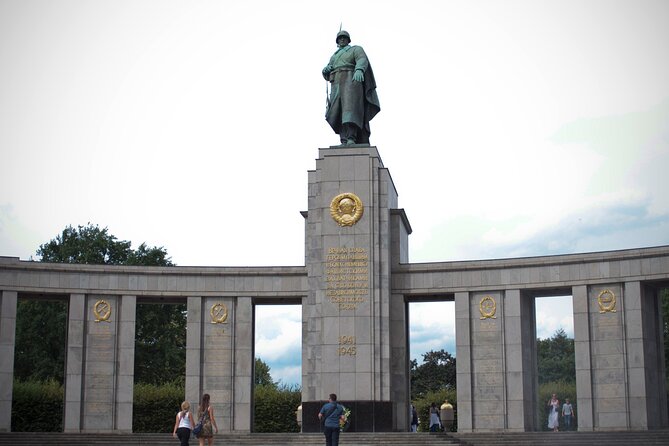
A surprisingly memorable stop is Tempelhofer Feld. This is the former Nazi-era airport, and later it became part of the Allied Berlin Airlift in 1948 and 1949. The space today is no longer an airport, but it’s a huge open area used by people as a kind of playground, which gives you a break from the heavier themes on the route.
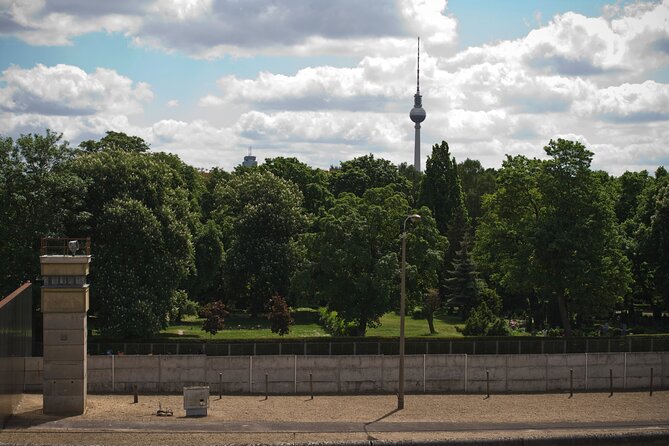
Then you shift into one of the most powerful Wall-area experiences on foot, Bernauer Strasse and the Berlin Wall Memorial. Here, you can understand what it meant when the Wall split the street. The wall trapped East Berlin residents while West Berlin neighbors watched, and the area became known for daring escape attempts.
The guide talks about references to escape tunnels, including Tunnel 29 and Tunnel 57, and you’ll see preserved sections of the Wall plus a watchtower and a documentation center. That mix matters. It gives you physical context, then adds the story of how people tried to get out.
If you’re wondering whether you can “learn a lot” without feeling overwhelmed, this is often the sweet spot. You get the drama of escape stories, but the memorial facilities help you absorb it at a realistic pace.
The tour can also include a stop in Prenzlauer Berg linked to an old NKVD prison later used by East Germany’s Stasi. It’s a place to hear about how secret police methods worked and what the site is used for today.
East Side Gallery: When the Wall Becomes Street Art
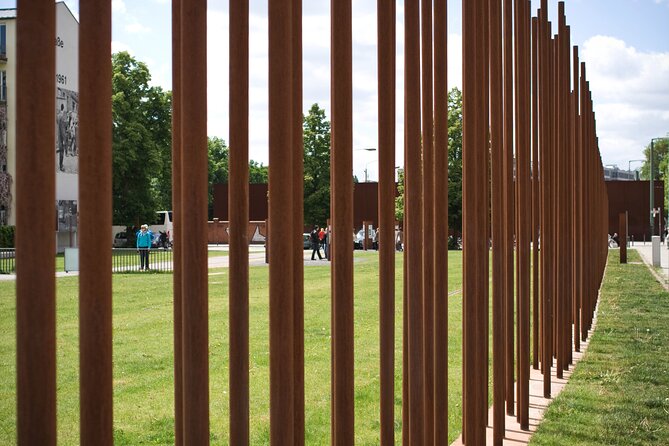
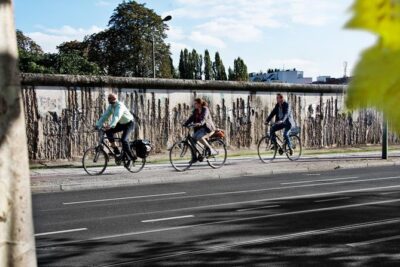
To finish this era shift, you may walk along the East Side Gallery. It’s described as the longest permanent open-air graffiti wall in the world, and it’s also noted as the longest piece of the Berlin Wall still standing.
What I like about ending here is the contrast. Earlier stops are about division, fear, and control. This one is about people taking space back and turning it into public expression. You’ll get time to look closely at murals and the themes they promote, like justice and freedom.
This stop works especially well if you want a final image that is not just ruins. It helps you remember that Berlin’s story is not only about walls falling. It’s also about how a city redefines itself after trauma.
Choosing WW2, Cold War, or Both: Make the Tour Fit Your Trip
You get to choose the direction. If you already have a general feel for Berlin, you can make this tour sharper by focusing on one era. If it’s your first full visit to the city, doing a combination of WW2 and Cold War usually gives you a map for the rest of your trip.
My practical tip: decide what you want from the guide before you start walking. Ask for more time on questions you’re actually curious about, like how Nazi power functioned, or how border control shaped everyday life. Private tours are good at that because the guide can adjust timing on the fly.
Guides like Jeff and Hannah are often praised for tailoring the experience and keeping it engaging, while guides such as Emma and Glen are noted for pacing well and answering questions without rushing. You’ll feel the difference most when you ask a follow-up and the guide can connect it to the next stop.
Should You Book This Private Walking Tour of Berlin’s WW2 and Cold War Sites?
Book it if you want structure and human context. This tour is a solid choice for couples, solo travelers, and small groups who want a “Berlin timeline” without spending your limited energy on routing.
It’s also a great fit if you care about memorial sites beyond the typical quick photo. The Holocaust Memorial stop includes an underground information center, and the Wall-area stops include documentation features, which is where the experience becomes more than impressions.
Skip it, or think twice, if you expect a relaxed stroll with lots of breaks and light content. This is a walking tour with concentrated stops, and food and drinks are not included. Wear good shoes, and plan meals for after the tour.
FAQ
How long is the private walking tour?
The tour lasts about 3 to 4 hours.
Is this tour private, or will I be with strangers?
It is a private tour/activity, so only your group participates.
Is hotel pickup and drop-off included?
Yes. Hotel pickup and drop-off are included.
Can I customize the tour for WW2, the Cold War, or both?
Yes. You can choose to focus on World War 2, the Cold War, or request a combination of both.
Is food or drinks included?
No. Food and drinks are not included.
Is the tour offered in English?
Yes. The tour is offered in English.
Are there admission fees at the stops?
Admission is listed as free for the stops on the route.
Pavements of Berlin
Wartime History Walks We Have Reviewed
The Divided Years, Reviewed
Everything else we filed on Berlin
- East Berlin: City of Shadows Walking Tour
★ 5.0 · 11 reviews - Berlin: Die Stachelschweine – Frank Lüdecke – Träumt Weiter
★ 4.7 · 11 reviews - Potsdam Day Trip from Berlin with a Local: Private & Personalized
★ 4.0 · 11 reviews - An Introduction to Berlin Walking Tour
★ 5.0 · 11 reviews - DJ for a Day: Learn to Mix Like a Pro in Berlin
★ 5.0 · 11 reviews - 2-H Segway Sightseeing Tour Berlin
★ 4.5 · 11 reviews
Cold War and Stasi History Tours, side by side.
 ★ 4.9Berlin: Third Reich and Cold War 2 Hour Walking TourFrom $236,830 reviews
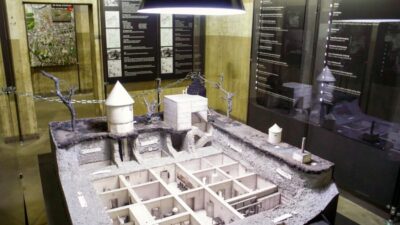 ★ 4.6Berlin: Berlin Story Bunker Entry TicketFrom $216,759 reviews
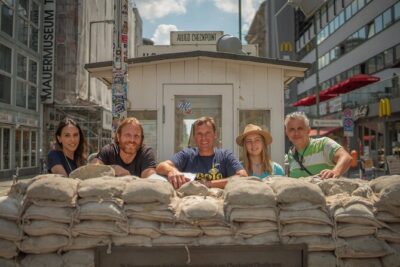 ★ 5.0Berlin’s Best: 2 Hour Walking Tour Third Reich and the Cold WarFrom $245,486 reviews
 ★ 4.3Berlin: DDR Museum TicketsFrom $153,443 reviews
 ★ 4.8Berlin: 75-minute Trabi SafariFrom $932,854 reviews
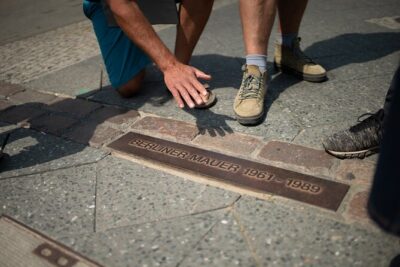 ★ 5.0Cold War, Berlin Wall, Spies and the East Side GalleryFrom $181,024 reviews
 ★ 4.8Nuremberg: Historischer Kunstbunker WWII Art Bunker TourFrom $14921 reviews
 ★ 4.9Leipzig: 90-Minute Trabi City TourFrom $81728 reviews
Other lists this tour is on