
REVIEW · BERLIN WALL
Berlin: Guided Bike tour of the Berlin Wall and Third Reich
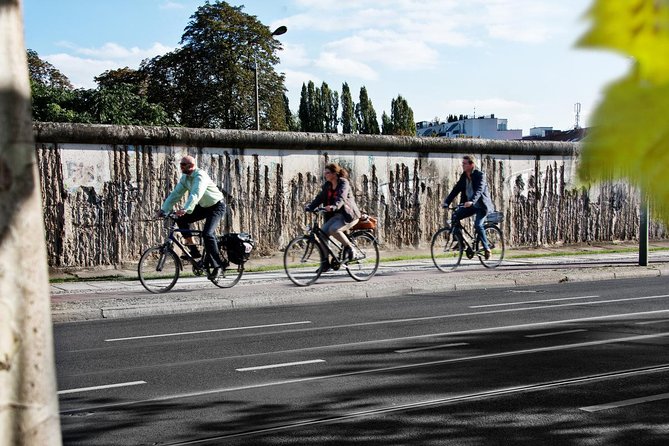
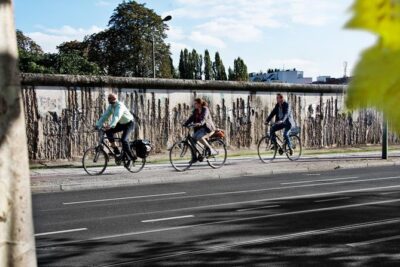
Berlin’s history shows up fast on two wheels.
What makes this ride special is how it mixes Berlin Wall realities with Nazi-era remnants, using a comfortable city bike and a real local guide to keep you moving safely through the city. I especially love the stop-by-stop focus on what the Wall changed in daily life, then how the tour turns that into lived-in context at sites like the Flak Tower and the Holocaust memorials. The one drawback to plan for is that the route can shift based on your guide’s decisions, so you should not book this only for one single exact photo stop.
If you’re trying to understand Berlin, this kind of tour works because you get motion and meaning at the same time. You cover a lot in three hours, yet you still get multiple meaningful stops, most of them free to visit. The tour is family-friendly, runs in all weather, and comes with a mobile ticket, which is a nice touch when you are juggling plans on a short Berlin stay.
In This Review
- Key things that make this tour worth your time
- Why biking the Berlin Wall teaches faster than standing still
- Price and logistics, what you really get for $42.34
- Where the ride starts, and how the day usually feels
- Nikolaiviertel: Berlin’s “old town” from a postwar lens
- Stiftung Neue Synagoge Berlin (Centrum Judaicum): civil courage after broken glass
- Memorials for deportation and Holocaust victims: why placement changes the message
- Berlin Wall memorial section: where you can really feel the barrier
- Mauerpark: from Wall-tortured years to everyday free expression
- Humboldthain Flak Tower: a Nazi-era structure with a view
- Günter Litfin memorial watchtower: the Wall told through one person
- Invalidenfriedhof: where a cemetery becomes a border story
- Spreebogenpark and Albert Speer’s Great Hall that never happened
- Reichstag Building: Hitler’s power grab to democratic history
- Holocaust Memorial to the Murdered Jews of Europe: a powerful stop with room to process
- Fuhrerbunker: where the bunker is now just a parking lot
- Checkpoint Charlie in the English version: the Cold War pressure point
- How the guides shape the experience, from Juliette to Constantine
- Stop time is limited, so plan your follow-up
- Safety and comfort on city roads, what to expect
- Who should book this Wall and Third Reich bike tour
- Should you book it? My honest recommendation
- FAQ
- How long is the bike tour?
- What language is the tour offered in?
- Is a bike and helmet included?
- Where do we meet and do we return to the same place?
- Is the tour family-friendly?
- Are any stops admission-free?
- What about food and drinks?
- Does it run in bad weather?
- Can I get a full refund if my plans change?
Key things that make this tour worth your time
- Bikes and helmets included, so you are not figuring out gear before you learn anything
- Local, adaptable routing under the Free Berlin concept, so no two days need to match perfectly
- Berlin Wall stops you can actually understand, not just point-and-photo moments
- Strong Holocaust memorial experiences, guided with room for discussion and personal interpretation
- Real city safety support, with guides helping you cross busy areas and stay together
- Family-friendly pacing, with infant seats available on request
Other walks along the Wall we have reviewed
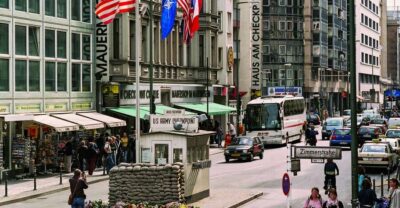
- Skip-the-Line: Berlin Wall Museum at Checkpoint Charlie★ 4.1 · 2,041 reviews
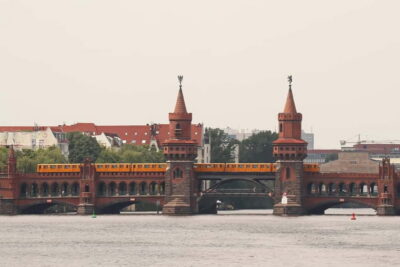
- Berlin: East Side Gallery Spree Cruise in a Solar Catamaran★ 4.0 · 1,039 reviews
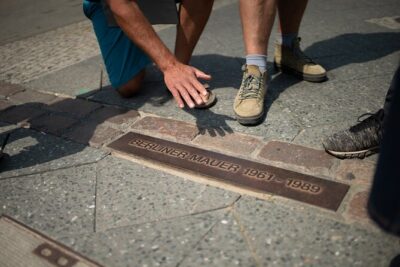
- Cold War, Berlin Wall, Spies and the East Side Gallery★ 5.0 · 1,024 reviews
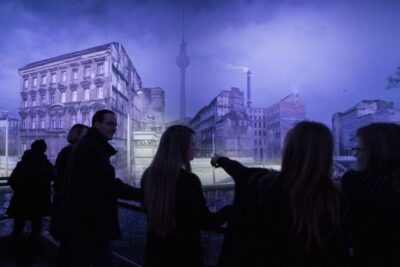
- THE WALL: asisi Panorama Berlin Ticket★ 4.5 · 580 reviews
Why biking the Berlin Wall teaches faster than standing still
Berlin can feel like a museum if you walk it the usual way. On a bike tour, the city’s scale makes sense right away. You notice how wide distances are, where borders would have felt absolute, and how quickly you can move from one era to another.
This tour is built around the Wall and the fall of Nazi Germany, but the balance matters. Some guides lean more toward Wall history with only occasional Third Reich connections, while other stops bring Nazi-era ideas into view more directly. Either way, the bike format helps you connect the dots: the Wall was not just a wall, it shaped movement, fear, and what people could plan for next week, not next century.
Price and logistics, what you really get for $42.34
At about $42.34 per person for roughly three hours, the value is strongest if you take advantage of what is included. You get a professional guide, a city bike, and a helmet, plus free admission at the listed stops. That is a solid deal in a city where guided history can easily get pricier.
What I like most is that you are buying structure. The route takes you from place to place with context, so you are not stuck reading plaques while trying to remember how the Cold War system worked. You also avoid the common problem of seeing Berlin Wall sections too late, after you have already exhausted your energy for learning.
The main consideration: this is a guided overview, not an all-day study session. You get time at each site, but if you want to linger and process, you will want to follow up on your own afterward.
Where the ride starts, and how the day usually feels
You meet at Free Berlin Bike Tours & Rental, Poststraße 11, 10178 Berlin, and the tour ends back there. That round-trip setup makes it easier to plan lunch or a second activity without guessing how you will get home.
Groups run from 4 to 15 people. In reviews, people liked that guides manage group flow well, including splitting larger groups into smaller ones when needed so riding stays comfortable. You will spend a lot of time cycling between stops, so it matters that your guide keeps the group together and gives clear instructions when bike lanes and main roads get busy.
One practical tip from real experience on the ride: if you are a little nervous about city cycling, you still have a chance to enjoy this. Multiple reviews point out that guides helped with safe riding instructions and handled wait times at red lights, which makes a difference when you are not used to Berlin traffic patterns.
Nikolaiviertel: Berlin’s “old town” from a postwar lens
You kick things off at Nikolaiviertel, described as the only real old town area of Berlin. It is a great first stop because it forces you to ask an immediate question: how “old” can something feel when Berlin has been reshaped by war, rebuilding, and the long shadow of the 20th century?
This is also a smart opening stop because it gets you thinking about layers. You are not just looking at buildings, you are thinking about what survived, what was rebuilt, and what stories Berlin chooses to show now.
What to expect: a short orientation moment, followed by riding onward. You likely will not walk far, so treat it as a launch point for the deeper Cold War stops ahead.
Further wartime history walks we have written up
Stiftung Neue Synagoge Berlin (Centrum Judaicum): civil courage after broken glass
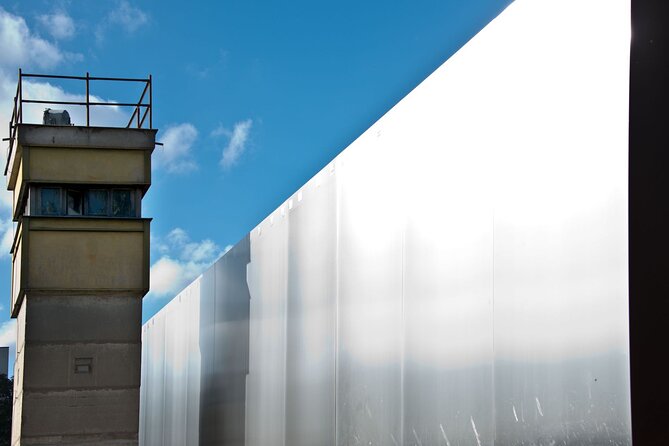
Next you stop at Stiftung Neue Synagoge Berlin, Centrum Judaicum. The guide’s framing matters here. One standout story centers on civil courage, including how a police officer helped save the synagogue during the night tied to broken glass.
This stop works because it connects history to human actions. It is not only about ideology or dates. It is about who acted, who protected, and how quickly a society can shift from normal life into danger.
Memorials for deportation and Holocaust victims: why placement changes the message
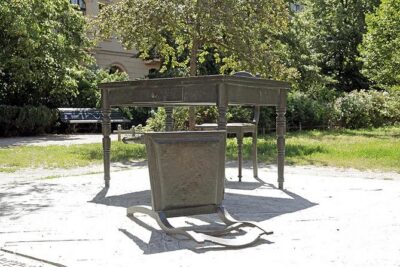
The tour includes additional memorial stops tied to Holocaust remembrance and victims of deportation, including one memorial designed in GDR times. That is important because Berlin has multiple remembrance sites with different tones and design choices.
You should think of these stops as pieces of one larger conversation. Some memorials you may have seen near major landmarks take a certain approach. Here you get contrast, and it can help you understand that remembrance is not one single style in Berlin. It reflects politics, decades of memory work, and what different communities wanted to emphasize.
If this topic hits you hard, you are in the right place. One review noted that at the Holocaust Memorial, the group shared personal interpretations, and that kind of guided room for meaning can make the visit more than just a photo stop.
Berlin Wall memorial section: where you can really feel the barrier
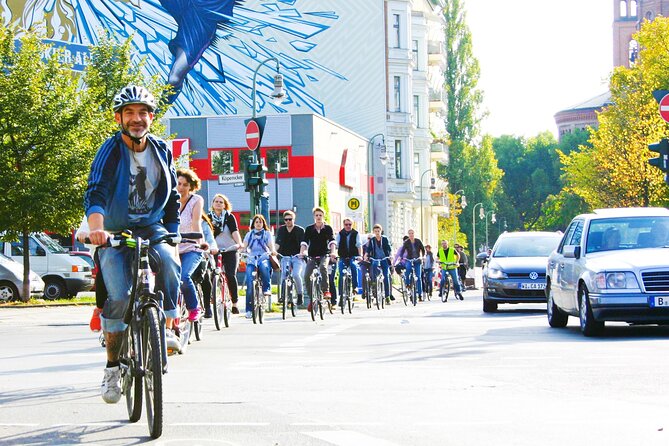
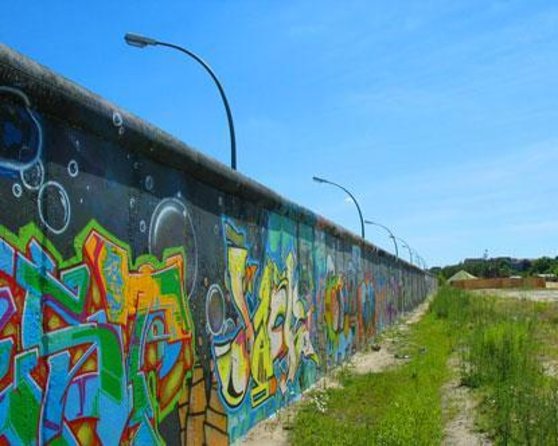
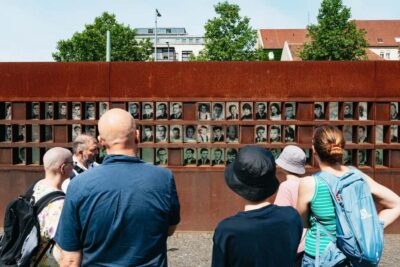
The heart of the ride is the Memorial of the Berlin Wall, where the Wall is still preserved enough that you can understand what it meant and what it did to Berlin. The tour emphasizes that this is one of the spots where the Wall is still alive enough for true comprehension, not just a marker.
What I like here is the “edutainment at its best” approach. That does not mean it becomes light. It means the guide uses the site to make the concept concrete, so you grasp how the Wall worked in daily life, not only how it looked from a distance.
Mauerpark: from Wall-tortured years to everyday free expression
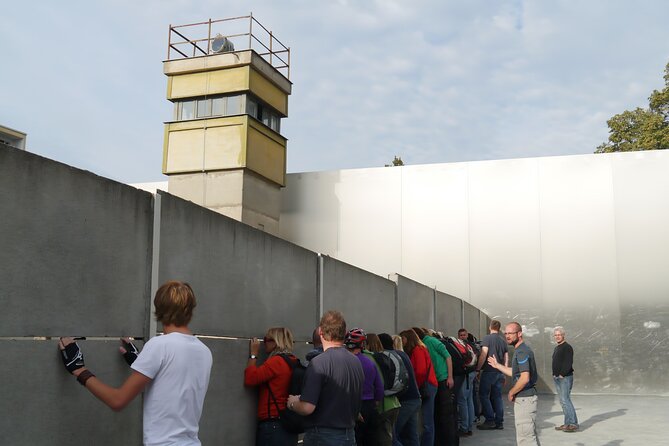
Then you roll into Mauerpark, known today for its Sunday flea market. The tour connects that lively scene to a serious backstory: the area endured decades under Wall-era restriction, then transformed into a space associated with free expression.
This stop is valuable because it shows you the contrast Berlin is famous for. The same ground can carry fear and, later, community energy. On a bike, you move through that contrast quickly, which helps your brain link eras instead of treating them as separate chapters.
Practical note: if you ride on a day when Mauerpark is active, you might notice the buzz. Your guide will keep it anchored in history, so you do not lose the thread.
Humboldthain Flak Tower: a Nazi-era structure with a view
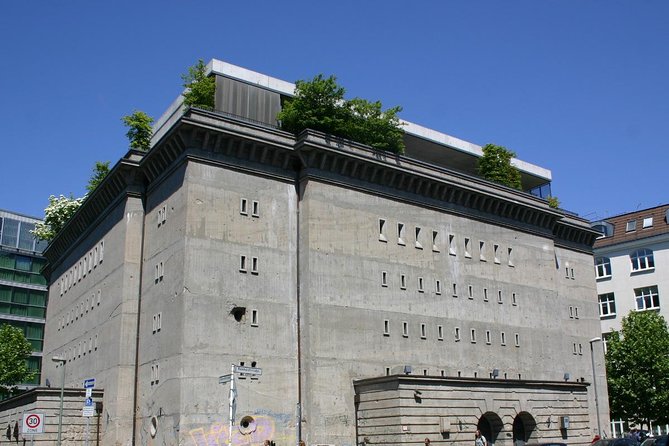
At Humboldthain Flak Tower, you get both architectural context and a clear payoff: the structure offers a fantastic panoramic view. The guide also connects what you see to Nazi-era design decisions, including insights into the architecture behind the air-raid fortress function.
This is one of those stops that changes how you picture the era. When you can see the city from the site of a massive wartime structure, it becomes easier to imagine what leaders planned and how they thought about control, protection, and scale.
Expect: a short stop for viewpoints and explanation, then back onto the bike.
Günter Litfin memorial watchtower: the Wall told through one person
Gunter Litfin Memorial centers on a preserved original watchtower and the memory of Günter Litfin, described as the first person shot at the Wall. A short stop like this can pack a punch, because it pulls the Wall away from abstract politics and into real consequences for one life.
What to remember: even if the stop is brief, it is meant to leave you with the sense that the system was enforced by violence, not just bureaucracy.
Invalidenfriedhof: where a cemetery becomes a border story
Next comes Invalidenfriedhof, a burial place cut in the middle by the Wall. The tour explains that the cemetery was made for Prussian heroes of German military history, and it uses the location to focus on escape stories tied to nearby former checkpoints and a canal that served as a natural border between East and West Berlin.
This stop feels different from the others because cemeteries slow you down. Even on a bike tour, you arrive already “in a different mode.” The guide can help you understand why that matters: the Wall did not only change streets. It cut across where people belonged, where people mourned, and where people tried to cross.
Spreebogenpark and Albert Speer’s Great Hall that never happened
At Spreebogenpark, you get an overview of Germany’s governing district from a perspective that helps you connect architecture to ambition. The guide also discusses plans associated with Hitler’s architect Albert Speer, including the vision for a Great Hall that could have fit around 180,000 people.
This is one of the tour’s most thought-provoking areas because it shows how ideas of power were built into building plans. Even if the structure never came to life the way leaders wanted, the drawings and concepts still shaped what got planned, what got prioritized, and what the state imagined itself to be.
Reichstag Building: Hitler’s power grab to democratic history
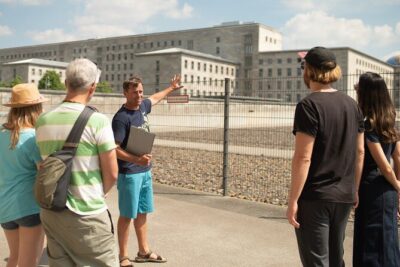
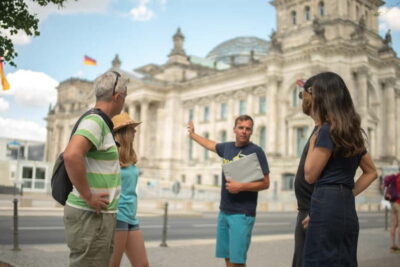
You stop at the Reichstag Building for what is essentially the tour’s political bridge. The guide discusses Hitler’s grab of power and Germany’s democratic history, with the emphasis on what you can see from the outside since there is not time to go inside.
This works well on a bike tour because you see the city’s political center in motion. You do not have to get lost in a museum. You can look at the building, then have the guide place it into a timeline you can keep in your head.
Holocaust Memorial to the Murdered Jews of Europe: a powerful stop with room to process
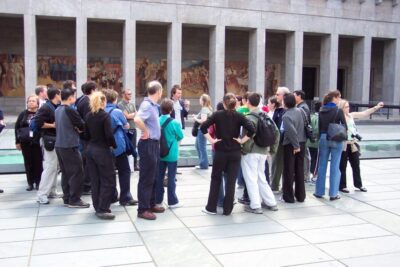
The day includes the Holocaust Memorial, Memorial to the Murdered Jews of Europe, described as the biggest genocide memorial in the world. The tour highlights that the site was created by those responsible for the killing, which is a hard fact that makes the design and size feel even more chilling.
This stop is also where your guide’s approach can make a difference. One group review notes that the memorial sparked discussion, with people sharing their own interpretations. That kind of guided space can help you process without feeling like you need the perfect response.
If you tend to be emotional at memorials, bring extra patience here. The memorial is the kind of place where you can feel time slow down, even in a short guided stop.
Fuhrerbunker: where the bunker is now just a parking lot
Fuhrerbunker is one of those sites that makes you sit up straighter. The tour explains that today, what you can see is essentially a parking lot, and the guide walks you through why.
This is a valuable reminder of how quickly history can get overwritten by daily life. Berlin is full of layers, and this is a very blunt layer change. It helps you understand why you need a guide at all. Without explanation, it can look like nothing.
Checkpoint Charlie in the English version: the Cold War pressure point
The tour includes Checkpoint Charlie only in the English version. That stop matters because it was the most famous border station of the Cold War, described as the only shared one between the USA and USSR. The guide uses this to explain how a third world war almost started right there in central Berlin.
This is an ideal stop if you want the Cold War to feel immediate rather than distant. You can imagine the tension because you are in the place where it concentrated.
One caution: because of the Free Berlin concept, guides can design their own route along the topic. If Checkpoint Charlie is your must-see, I would treat this as a key decision point for choosing your language option and confirming that stop aligns with your expectations.
How the guides shape the experience, from Juliette to Constantine
A bike tour lives or dies on the guide’s storytelling and on the practical safety side. This one gets very high marks for both.
You might ride with guides like Juliette or Theo, who are praised for being thorough and for keeping the ride well balanced between stops. Others, like Yonis and Paul, stand out for enthusiasm and detailed historical perspective, plus a friendly style that keeps questions flowing. Constantine is highlighted for being attentive and for taking park routes when busy streets can feel intimidating.
For me, the biggest pattern across the praised guides is this: they are not only reciting facts. They connect the geography of East versus West Berlin to how people lived, and they use interactive questions to shape how much to cover. That means you are more likely to leave with a clearer mental map.
Stop time is limited, so plan your follow-up
One practical truth with any 3-hour tour: you will not get deep time at every site. Even when the day feels full, some people wished they had waited and spent more time at the Wall itself. That is not a flaw in the concept, it is the trade-off you choose when you compress history into a short ride.
My advice: treat this tour as your orientation and your motivation. After the ride, go back to the one or two places that stayed with you most. Berlin rewards that.
Safety and comfort on city roads, what to expect
Berlin is famously bike-friendly, but “friendly” does not mean “zero stress.” A few riders noted that cycling on main roads, even in bike lanes, can feel daunting. The good news is that the guides typically help you through it, with clear instructions and group management.
Also, the bikes are described as city bikes and you get a helmet, which helps you relax and focus on learning instead of worrying about gear.
And yes, there is often practical storage. Reviews mention bikes with baskets that make it easier to carry a bag, coat, or water bottle. Even if you travel light, you will still appreciate somewhere to put things.
Who should book this Wall and Third Reich bike tour
This tour is a great fit if you want:
- a guided Berlin Wall route with enough depth to understand impact, not just locations
- a way to cover multiple historic sites without spending your whole day on foot
- an experience you can do as a family, with kids welcome and infant seats on request
- an English-language learning option that also includes Checkpoint Charlie in that version
You might skip it if you want long, quiet time at a single memorial or if you are the type who needs guaranteed stops exactly as listed. The Free Berlin concept means routes can vary, so you should go in open-minded about what you will see.
Should you book it? My honest recommendation
Book it if you want a high-value history ride that uses cycling as the backbone and turns major sites into clear context. The guide quality and the structure get strong praise, and the tour length is realistic for most schedules.
But make your expectations match the format. This is an overview on a bike, not a full-day curriculum. And because the route can change under the Free Berlin concept, I would not choose this tour as your only option if you have one single site as your non-negotiable.
If your goal is to understand how the Wall shaped Berlin, then see Nazi-era threads through places like the Flak Tower, the Reichstag area, and the Fuhrerbunker site explanation, this is a smart use of three hours.
FAQ
How long is the bike tour?
It runs for about 3 hours.
What language is the tour offered in?
The tour is offered in English and German, depending on the selected option.
Is a bike and helmet included?
Yes. Bike use and a helmet are included.
Where do we meet and do we return to the same place?
You meet at Free Berlin Bike Tours & Rental on Poststraße 11, 10178 Berlin, and the tour ends back at the meeting point.
Is the tour family-friendly?
Yes. Children are welcome, and infant seats can be provided on request. Children must be accompanied by an adult.
Are any stops admission-free?
The listed stops are free, with no admission ticket required for the sites included in the route.
What about food and drinks?
Food and drinks are not included unless specified.
Does it run in bad weather?
Yes, it operates in all weather conditions, so dress appropriately.
Can I get a full refund if my plans change?
Yes, you can cancel up to 24 hours in advance for a full refund. If you cancel less than 24 hours before the start time, the amount paid is not refunded.
The Berlin Bike Lanes
Wartime History Walks We Have Reviewed
Following the Wall a Little Further
Everything else we filed on Berlin
- East Berlin: City of Shadows Walking Tour
★ 5.0 · 11 reviews - Berlin: Die Stachelschweine – Frank Lüdecke – Träumt Weiter
★ 4.7 · 11 reviews - Potsdam Day Trip from Berlin with a Local: Private & Personalized
★ 4.0 · 11 reviews - An Introduction to Berlin Walking Tour
★ 5.0 · 11 reviews - DJ for a Day: Learn to Mix Like a Pro in Berlin
★ 5.0 · 11 reviews - 2-H Segway Sightseeing Tour Berlin
★ 4.5 · 11 reviews
Berlin Wall and Divided City Tours, side by side.
 ★ 4.8Nuremberg: Tunnels and Secret Passages in the City Wall TourFrom $142,334 reviews
 ★ 4.1Skip-the-Line: Berlin Wall Museum at Checkpoint CharlieFrom $212,041 reviews
 ★ 4.0Berlin: East Side Gallery Spree Cruise in a Solar CatamaranFrom $271,039 reviews
 ★ 5.0Cold War, Berlin Wall, Spies and the East Side GalleryFrom $181,024 reviews
 ★ 4.5THE WALL: asisi Panorama Berlin TicketFrom $16580 reviews
 ★ 4.7Berlin: Guided Bike Tour of the Berlin Wall and Third ReichFrom $40499 reviews
 ★ 4.8Berlin: Cold War Walking Tour on Berlin Wall RouteFrom $26437 reviews
 ★ 4.9East Berlin and the Wall: Walking TourFrom $351407 reviews
Other lists this tour is on