
REVIEW · JEWISH HERITAGE
Berlin: Jewish Walking Tour including World War II
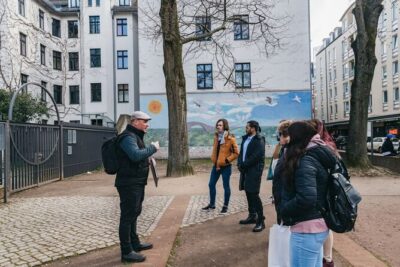
Berlin tells a hard story well. This Jewish walking tour in Mitte traces Jewish life from Moses Mendelssohn’s era to what still echoes today, led by Tal, a certified Berlin guide.
I especially like Tal’s mix of street-level storytelling and serious background, including her post-doctorate work on how the Charité Hospital handled its 1930s and 1940s past. The other thing I really like is the balance on the route, you see major institutions like the Great Synagogue area and the old cemetery, then you connect them to WWII events and present-day memory. A possible drawback: it’s about 3.5 to 4 hours on foot and, even though the activity is described with some accessibility notes, it also states it is not suitable for wheelchair users or people with mobility impairments, so plan carefully.
In This Review
- Key things you’ll notice on this Berlin Jewish walking tour
- Where Mitte becomes a Jewish map of Berlin
- Tal’s storytelling, and why it feels grounded
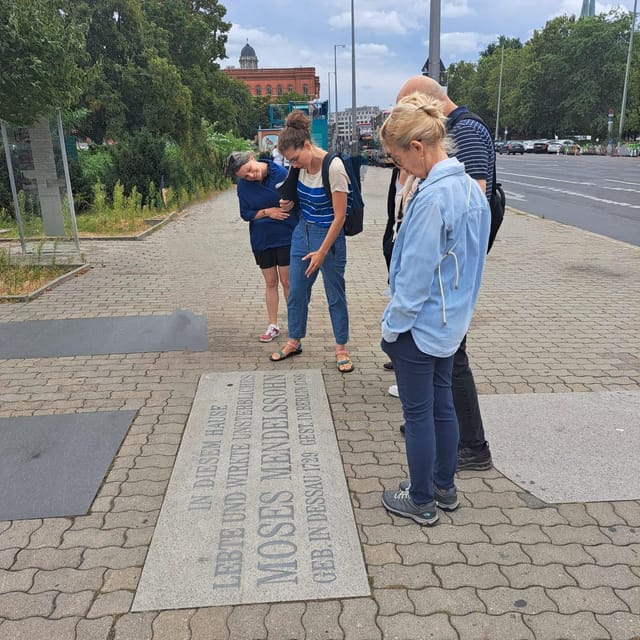
- Hackescher Markt: the late 1600s re-establishment and Moses Mendelssohn
- Rosentalstrasse Monument: women’s protests in 1943
- Otto Weidt Workshop for the Blind, and the practical heroism of saving lives
- Old synagogues, the first cemetery, and what Berlin preserved
- The Great Synagogue area and the New Synagogue’s rise and fall
- Hackescher Markt to the westward shift, and the arrival of the Ostjuden
- Customization and optional add-ons for different interests
- Tickets that are included, and what you might need separately
- Time on your feet: timing, what to bring, and small rules
- Price and value: why $318 can make sense here
- Should you book this Berlin Jewish walking tour?
- FAQ
- Where does the tour start?
- What is the meeting point and where does it end?
- How long is the tour?
- What languages are the tour offered in?
- Is the Otto Weidt Museum ticket included?
- Is entry to the Old Jewish Cemetery included?
- Are meals included in the price?
- Can I add extra sites to the tour?
- Is flash photography allowed?
- What should I bring, and what are the key rules?
Key things you’ll notice on this Berlin Jewish walking tour
- Tal’s guided approach links architectural landmarks to real people, including Otto Weidt and the story behind the Otto Weidt Workshop for the Blind
- Moses Mendelssohn to today framing, starting with the community’s re-establishment in the late 1600s
- WWII memorials you can stand beside, including the Rosentalstrasse Monument linked to women’s protests in 1943
- Old and New Synagogue sites, including the first synagogue area and the New Synagogue’s golden era turning into its fall
- Mitte as a focal point, from Hackescher Markt through institutions tied to the movement of the community westward and the arrival of the Ostjuden
- Optional add-ons like the Kindertransport Memorial at Friedrichstraße Station and deportation memory at Grunewald
Further wartime history walks we have written up
- Berlin: Third Reich and Cold War 2 Hour Walking Tour★ 4.9 · 6,830 reviews
- Berlin’s Best: 2 Hour Walking Tour Third Reich and the Cold War★ 5.0 · 5,486 reviews
- Third Reich Berlin: Hitler and WWII Walking Tour★ 5.0 · 3,301 reviews
- Berlin: Third Reich, Hitler, and WWII Walking Tour★ 4.9 · 1,133 reviews
Where Mitte becomes a Jewish map of Berlin
If you want Berlin to make sense fast, start with Mitte. That’s exactly where this tour begins, at Starbucks near Hackescher Markt, a central meeting spot where lots of Jewish institutions clustered. The route is built for walking, so you get the feeling of moving through the city as the story moves too, first upward in time, then straight into WWII.
What I like is how the tour treats place as evidence. You do not just hear that a community existed. You see the streets where institutions worked, the areas tied to schooling and community life, and the memorials that mark what happened when normal life was shattered.
A quick note on tone: this is not a casual history stroll. You will cover tragic WWII history, including deportation context, and it asks you to pay attention as you look. Bring the right mindset, calm and focused beats rushed and distracted.
Tal’s storytelling, and why it feels grounded
Tal is a certified Berlin guide with the Berlin Guides Association, and she brings more than enthusiasm. Her professional background includes research around how medical staff at Berlin’s Charité Hospital dealt with the hospital’s past in the 1930s and 1940s. That matters because it keeps the story from becoming only dates and names.
On the ground, you’ll hear the kind of details that make people feel real: why communities formed, how they organized schools, what tensions existed within Jewish life, and how external pressure turned daily life into survival. The tour also includes language support, English and Hebrew, which can add a meaningful extra layer if you speak either.
Group size is private, so the pace tends to be easier to follow than big group tours. You can ask questions, and Tal can tailor the route if you want additional stops.
Hackescher Markt: the late 1600s re-establishment and Moses Mendelssohn
Your first guided stop is Hackescher Markt, about 15 minutes. This is where the tour frames Berlin as a home that Jewish life rebuilt over generations. You start with the late 1600s re-establishment of the community, and then you zoom toward key figures. The anchor name is Moses Mendelssohn, whose role connects intellectual life, community growth, and the long arc that leads into the modern city you see today.
Why this opening works: Hackescher Markt is not just a backdrop. It’s positioned as a focal area for Jewish life as Berlin’s Jewish community expanded and re-organized. You also get context on the later shift in where people lived, including the move westward as the city changed.
If you’re a first-time Berlin visitor, this early setup helps you stop feeling lost. You’ll start to recognize why the route is moving where it moves.
Rosentalstrasse Monument: women’s protests in 1943
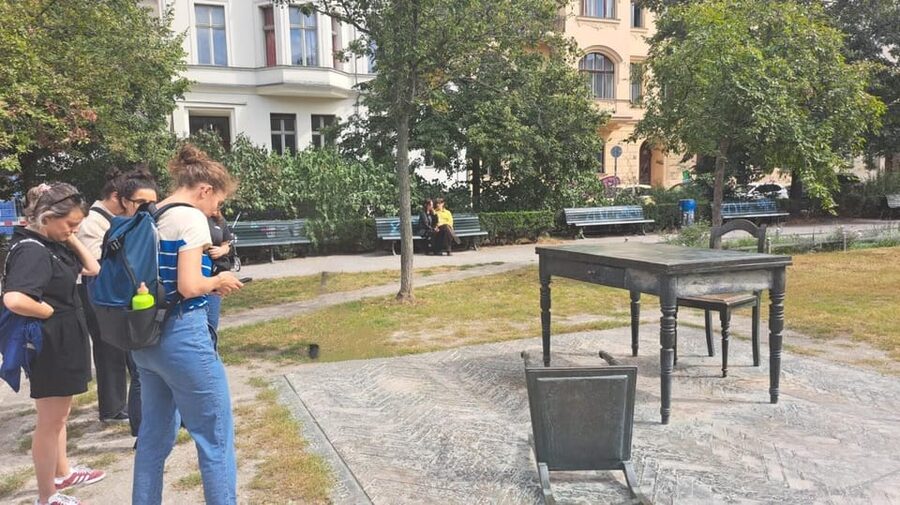
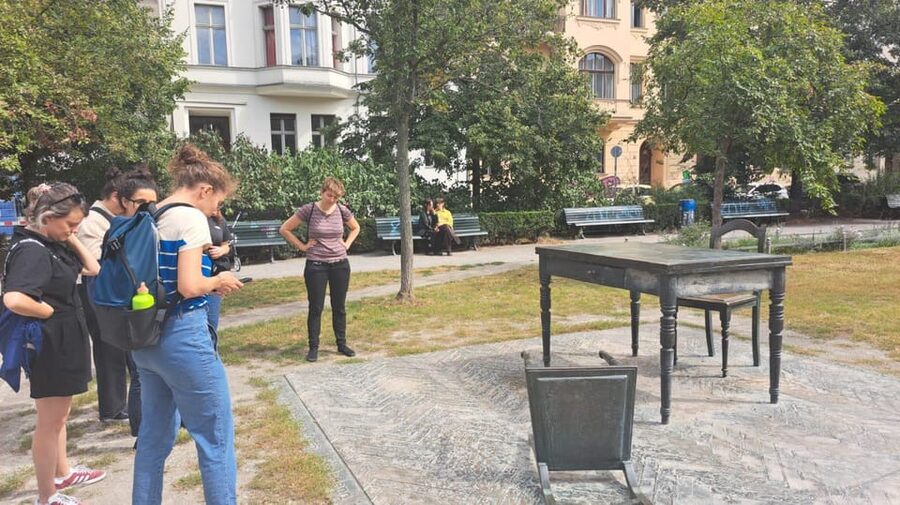
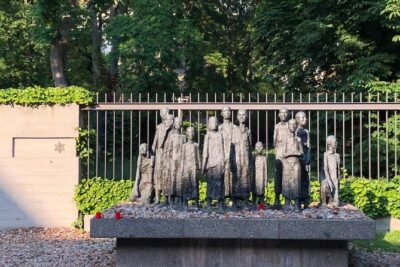
One of the route’s most important stops is the Block of Women area, and it ties to a 20-minute segment focused on protest in 1943. The tour points you to the Rosentalstrasse Monument, which commemorates women’s protest during WWII.
This is the kind of moment where you might hear the wind in your ears, not because the guide is quiet, but because the topic is heavy. What makes this part worth your attention is that it refuses to treat victims as only statistics. It highlights agency, risk, and action, even inside a system built to crush choice.
If you want the tour to feel balanced, this is one of the pieces that helps. You see both tragedy and resistance.
More Jewish heritage walks and memorial visits
Otto Weidt Workshop for the Blind, and the practical heroism of saving lives
Then the tour moves to one of its best-known emotional anchors: Otto Weidt Workshop for the Blind. You’ll get around 30 minutes for this part, plus entry included on days it’s open.
Otto Weidt’s story is inspirational without turning into a fairy tale. You hear how people were hidden and protected, and how small acts inside a grim reality could still matter. The workshop context is especially powerful because it’s not only about what happened in camps. It’s about what could happen in cities, in workshops, and in everyday places where hope was risky.
This is also where the reviews’ praise makes sense. People often walk away talking about Tal’s personal storytelling here, the way she connects the historical facts to the individuals you can imagine standing in these same rooms.
Practical tip: the museum part can shift from outdoors to interior spaces. Wear comfortable shoes and keep your phone ready for notes, not flash photos, since flash photography is not allowed.
Old synagogues, the first cemetery, and what Berlin preserved
A major highlight is the combination of the old synagogue site and the Old Jewish Cemetery. You’ll see the earlier synagogue area as part of the historical sweep, and later you’ll visit the first cemetery, which is included in your tour unless it falls on a Jewish holiday or Saturday.
This part is valuable because cemeteries are the city’s long memory. Mendelssohn’s burial is connected here, so you’re standing in a place tied to an early peak era of Berlin’s Jewish life. It’s not only about the cemetery itself. It’s about continuity, what survives, and how the city holds onto traces even when the community was violently interrupted.
From a design standpoint, the tour also places these sites near other community institutions in Mitte, like the Mendelssohn School and the girls’ school (mentioned as part of the institutional stops). You start to see the community as more than worship. You see education and daily structure.
Possible emotional reality check: cemetery time can feel quiet and slow. That’s normal. If you’re someone who needs a lot of movement to process, plan to lean into the pace anyway. The payoff is in the calm.
The Great Synagogue area and the New Synagogue’s rise and fall
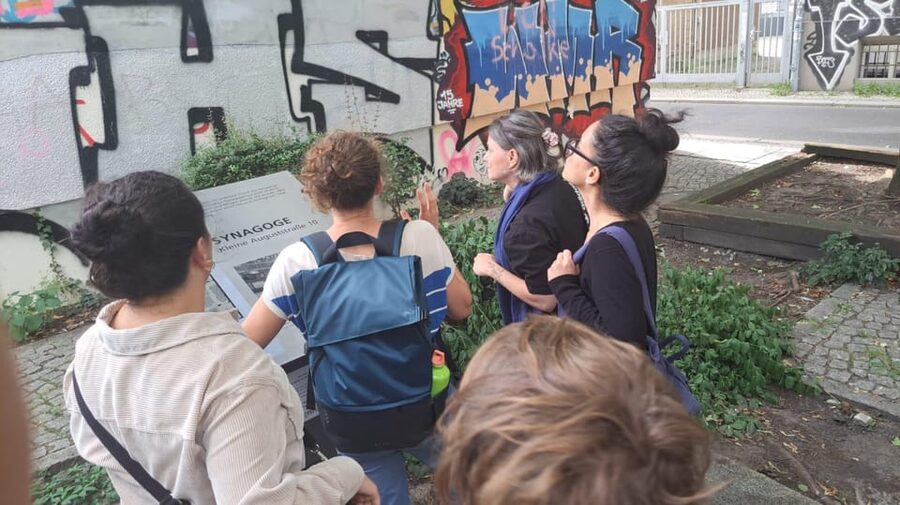
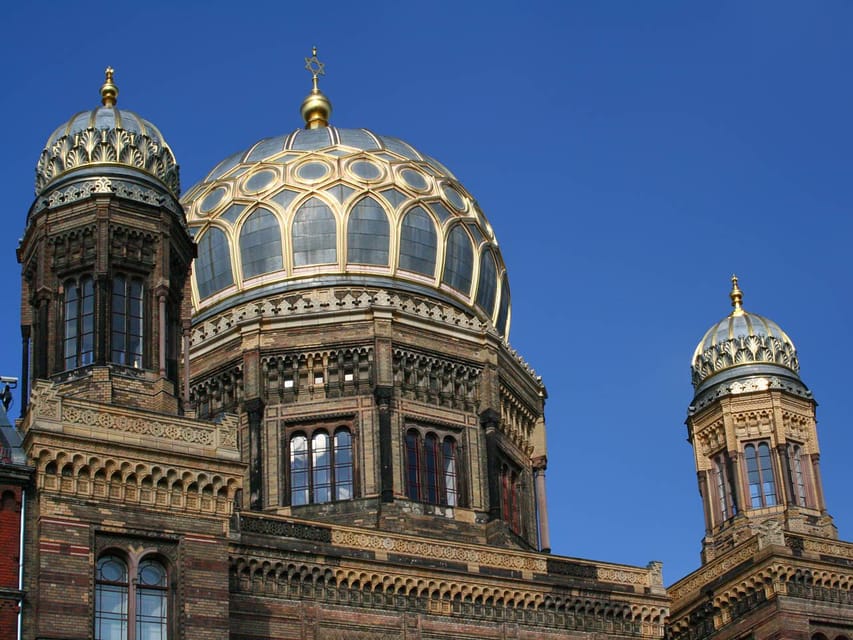
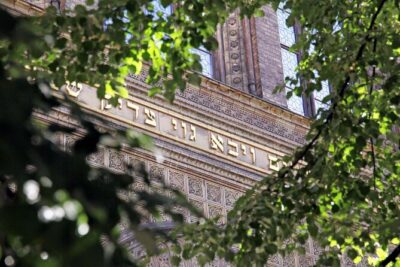
The route includes a stop connected to the New Synagogue Berlin, Jewish Centre, with about 30 minutes there. The tour highlights it as both a golden moment and the later fall, and it’s presented from the outside in the sense that the building’s story is discussed as part of the broader historical arc.
You also see the Great Synagogue area as a key landmark. Together, these synagogue stops give you a visual timeline: growth, confidence, and then the catastrophic disruption that followed.
This is one of the places where the tour’s WWII thread stays connected to civic reality. The tragedy is not treated as a separate chapter. It’s shown as a brutal interruption of a life that had been built with schooling, institutions, and religious community structures.
Hackescher Markt to the westward shift, and the arrival of the Ostjuden
Another core theme is how Berlin’s Jewish community changed over time. The tour discusses the move to the west of the city and the arrival of Ostjuden, Eastern European Jews who sought refuge in Berlin from pogroms.
This is where the tour becomes more than a straight line of time. You get community dynamics, including splits within Jewish life connected to changes introduced over time, such as disputes linked to the introduction of the organ. The guide also addresses how German Jews responded to the arrival of Eastern European Jews, including embarrassment within German Jewish circles. Those details can feel uncomfortable, but they make the history more honest.
Why I think this section matters: it prevents the story from being simplified. Jewish Berlin was not one uniform group acting the same way. It was people making choices, building institutions, arguing about tradition, and adapting under pressure. Understanding that helps you make sense of the social fabric that WWII destroyed.
Customization and optional add-ons for different interests
You can tailor the experience. The tour explicitly allows customization to include extra sites based on what you care about most. If you want to go beyond Mitte, there are optional extensions:
- Schönhauser Allee Cemetery, tied to final resting places of famous members from Berlin’s golden era
- Kindertransport Memorial at Friedrichstraße Station, which connects to the story of children escaping before and during the war period
- Grunewald Deportation Memorial, which commemorates the deportation of Berlin’s Jews
What’s smart here is that the tour gives you options without forcing everything into a single long walk. If you are short on time, you can stay with the core route in Mitte. If you want deeper memorial focus, you add one or more extensions.
If you choose an add-on, you’re likely to need extra time and an extra cost, since extensions are described as separate.
Tickets that are included, and what you might need separately
This tour includes entry to the Otto Weidt Museum when it’s open, and entry to the Old Jewish Cemetery except on Jewish holidays and Saturday. It’s also a walking tour with your guide.
What is not included: there is no meal plan, and meals and drinks are on you. Also, Centrum Judaicum is not included, and the museum in the New Synagogue complex is separate if you want it.
For planning your day, I suggest you treat this like a cultural and memorial block, not like a sightseeing sprint. Bring water, and consider grabbing food after, not before, so you don’t rush.
Time on your feet: timing, what to bring, and small rules
The tour runs about 3.5 to 4 hours with a short break. That duration is long enough to cover multiple stops, and short enough that you can still do other Berlin sights later the same day.
Bring comfortable shoes. You’ll also want a hat and a head covering or kippah, since the tour suggests one. If you’re visiting in warmer months, add sunscreen and water.
Rules are simple: no smoking, and no flash photography. It’s a respectful setting, especially around memorials and cemetery areas.
One more thought: since the tour covers WWII tragedy, you’ll want to pace yourself mentally too. If you get emotional, that’s not failing. It’s the point of visiting places where memory is physical.
Price and value: why $318 can make sense here
The price is $318 per person, and that number only makes sense when you understand what you’re buying.
You are paying for a private guided walking tour with a certified guide, Tal, plus included admissions for parts of the story. Otto Weidt Museum entry and Old Jewish Cemetery entry are built into the experience on days they are open, which takes some cost pressure off you compared with paying museum tickets separately. You also get guide depth, including bilingual support in English and Hebrew, and the ability to customize the route and add optional sites.
Meals are not included, so factor that into your personal budget. But if you are the type of traveler who values context and careful storytelling, the guided time is the main cost driver, not just the buildings you see.
In other words: you’re not just touring Berlin landmarks. You’re getting a guided interpretation of Jewish Berlin through its peaks, collapses, and surviving memory.
Should you book this Berlin Jewish walking tour?
Book it if you want Berlin to hit you in the right way, with both major landmarks and the human stories tied to them. This is especially a good choice if you care about Mitte, Jewish institutions, and WWII history presented with real-world location and thoughtful structure.
Skip it or check first if you need strong mobility support, since the info says it is not suitable for wheelchair users and people with mobility impairments. Also, if you know you react strongly to WWII topics, go in with a calm plan and leave extra time after the tour for decompression.
If you want a guided thread through Berlin’s Jewish past and present, with a guide who clearly knows the subject and knows how to stand in front of real places and explain what happened there, this is a smart booking.
FAQ
Where does the tour start?
The tour starts in front of Starbucks in Mitte.
What is the meeting point and where does it end?
You meet at the Starbucks location and the tour ends back at the same meeting point.
How long is the tour?
The duration is about 3.5 hours (you can check available starting times).
What languages are the tour offered in?
The tour guide offers English and Hebrew.
Is the Otto Weidt Museum ticket included?
Yes. Entry to the Otto Weidt Museum is included except on days the museum is closed.
Is entry to the Old Jewish Cemetery included?
Yes. Entry to the old cemetery is included except on Jewish holidays and Saturday.
Are meals included in the price?
No. Meals and drinks are not included.
Can I add extra sites to the tour?
Yes. The tour allows customization, and there are optional extensions such as Schönhauser Allee Cemetery, the Kindertransport Memorial at Friedrichstraße Station, and the Grunewald Deportation Memorial.
Is flash photography allowed?
No. Flash photography is not allowed.
What should I bring, and what are the key rules?
Bring comfortable shoes, a hat, head covering or kippah, sunscreen, and water. Smoking is not allowed.
Pavements of Berlin
Jewish Heritage and Memorial Visits
Wartime History Walks We Have Reviewed
Everything else we filed on Berlin
- Private Photo Tour in Kreuzberg
★ 5.0 · 3 reviews - Kreuzberg Private Walking Tour: Immigrants, Artists & Hipsters
★ 5.0 · 3 reviews - Berlin’s Jewish Heritage: Private Tour of the Vibrant Jewish District
★ 5.0 · 3 reviews - Individual city tour Berlin for max. 8 persons
★ 5.0 · 3 reviews - Berlin & The Third Reich Private Guided Tour
★ 5.0 · 3 reviews - Private Analogue Photography Experience in Berlin
★ 5.0 · 3 reviews
Jewish Heritage and Holocaust Memorial Tours, side by side.
 ★ 4.5Berlin: Jewish Museum Berlin Entrance TicketFrom $08,393 reviews
 ★ 4.8Nazi Berlin and the Jewish Community TourFrom $2755 reviews
 ★ 5.0Path of Resistance: Berlin’s Hidden Holocaust StoriesFrom $5633 reviews
 ★ 5.0Private Tour: Jewish Heritage Walking Tour of BerlinFrom $19129 reviews
 ★ 5.0Jewish Berlin: Walking tour The Old Jewish Quarter (private 3 Hours tour)From $35627 reviews
 ★ 4.5Jewish Life in Berlin – Private Walking TourFrom $35521 reviews
★ 5.0Path of Resistance: Berlin’s Hidden Holocaust StoriesFrom $4819 reviews
 ★ 5.0Jewish Berlin Extended (private Walking tour – 5 Hours)From $62418 reviews
Other lists this tour is on