
REVIEW · BERLIN WALL
Berlin: Private Bike Tour of the Berlin Wall and Third Reich
Berlin makes more sense from a bike seat.
This private bike tour strings together Wall landmarks and key Third Reich-era locations, so you get the story of Berlin’s most brutal decades without spending half the day in transit. I love the way the stops are practical and close enough to help you understand scale, not just dates. I also love the Free-Berlin Concept, where your guide designs the route, so you are not stuck in a one-size-fits-all script.
The one thing to plan for is that you are outside for most of the 3 hours. It runs in all weather, so dress for wind and rain, and accept that each stop is time-boxed, so you get the highlights rather than lingering all day.
In This Review
- Key highlights to look for
- Why Berlin Wall history clicks faster on two wheels
- Price and value: what $107.42 really buys
- Private tour logistics that keep the day simple
- Starting in Nikolaiviertel: old town, bombed memories, and why it matters
- Synagogues and civil courage at Stiftung Neue Synagoge Berlin
- Memorials that sit with you: deportation and Holocaust sites in GDR contrast
- The Wall where it still feels physical: Memorial of the Berlin Wall
- Mauerpark: the flea market built on border logic
- Humboldthain Flak Tower: Nazi architecture plus a view
- Günter Litfin Memorial and the first shooting at the Wall
- Invalidenfriedhof: when the Wall cut through a cemetery
- Spreebogenpark and Albert Speer’s Great Hall vision
- Reichstag Building: power grabs and democracy, seen from outside
- Holocaust Memorial cluster: scale, meaning, and the weight of irony
- Hitler’s last days at Fuhrerbunker, now just a parking lot
- Checkpoint Charlie on the English departure: Cold War tension in a small space
- Who this tour is for, and who might want a different plan
- Booking timing and comfort tips that will help you enjoy it
- Should you book this Berlin Wall and Third Reich bike tour?
- FAQ
- How long is the Berlin Wall and Third Reich private bike tour?
- How much does the tour cost?
- Is this tour private or shared?
- What languages are available?
- Does the tour run in bad weather?
- Where do I meet the guide?
- What is included, and do I need to bring a bike or helmet?
- What is the cancellation policy?
Key highlights to look for
- A private route built just for your group, with no blending into larger crowds
- Bike plus helmet included, so you can keep your focus on the sites, not logistics
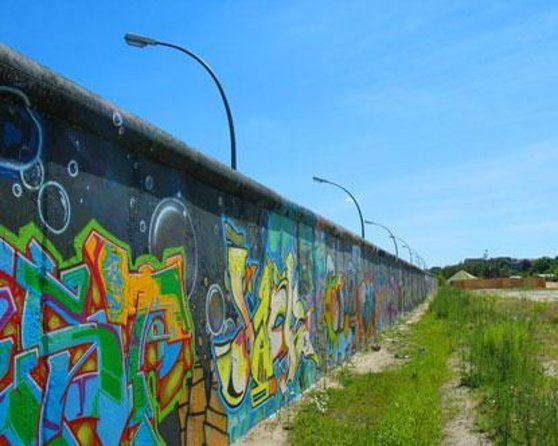
- Wall sections that still feel real, with multiple spots where the Wall’s impact becomes tangible
- A smart mix of Holocaust memorials and Cold War flashpoints, including Checkpoint Charlie on the English option
- City views that explain design, from Nazi-era architecture angles to the government district overview
- Family-friendly timing and pacing, with infant seats available on request
Other walks along the Wall we have reviewed
- Skip-the-Line: Berlin Wall Museum at Checkpoint Charlie★ 4.1 · 2,041 reviews
- Berlin: East Side Gallery Spree Cruise in a Solar Catamaran★ 4.0 · 1,039 reviews
- Cold War, Berlin Wall, Spies and the East Side Gallery★ 5.0 · 1,024 reviews
- THE WALL: asisi Panorama Berlin Ticket★ 4.5 · 580 reviews
Why Berlin Wall history clicks faster on two wheels
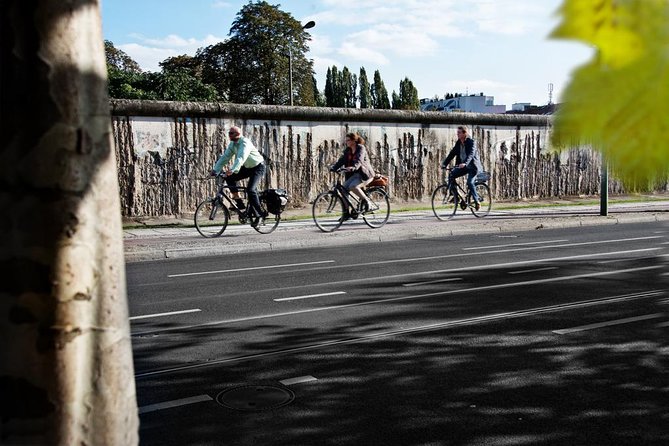
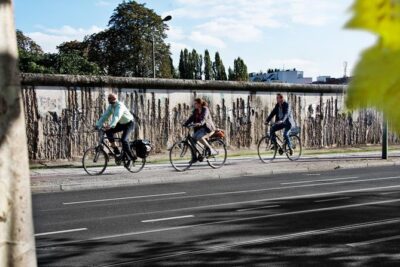
If you only do the Berlin Wall at a single viewpoint, you miss the point. The Wall was a system, a set of barriers and forced paths that shaped daily life. On this tour, you ride between multiple key sites, which helps your brain stitch the story together.
Cycling is also the honest way to see Berlin. Many of the important locations are spread out enough that walking can feel slow and frustrating. With bikes, you cover ground quickly, so you spend more time where it matters: at the buildings, memorials, and viewpoints that make the history concrete.
Price and value: what $107.42 really buys
At about $107.42 per person for roughly 3 hours, this is not a bargain-price group hop. It is closer to a small-group history coaching session, with the convenience of bike and helmet included and the benefit of a private setting.
The value gets stronger if you have a small group. It is designed to operate from 4 people minimum, and it offers group discounts, which usually makes the per-person cost feel more reasonable. Also, you get a professional guide and a tailored route concept, so you are paying for interpretation, not just transportation.
Private tour logistics that keep the day simple
Meeting point is easy and central: Free Berlin Bike Tours & Rental, Poststraße 11 (10178 Berlin). The tour ends back at the same place, so you are not coordinating a second ride or chasing a different meetup point.
You will start on a provided bicycle with a helmet. That matters because Berlin weather and street conditions can change fast. Having the gear handled lets you focus on riding and listening.
Your group has its own guide time. That is a big deal on a history route where questions come up, and where you might want the pace to match your interests.
Starting in Nikolaiviertel: old town, bombed memories, and why it matters
You begin at Nikolaiviertel, which the tour frames as Berlin’s only real old town. That sets a thoughtful tone right away: Berlin’s story is not just what survived, it is also what was rebuilt, reshaped, and overwritten.
The guide’s job here is to help you understand how old the area feels, and how the city’s destruction from bombings fits into the larger timeline. It is a calm opener, but it is doing important groundwork. You are teaching your eyes to spot layers in Berlin, not just individual landmarks.
If you like history that explains the cityscape, this first segment is a good match. If you just want the biggest Wall sights immediately, this start may feel slightly slower, but it pays off later.
Further wartime history walks we have written up
Synagogues and civil courage at Stiftung Neue Synagoge Berlin
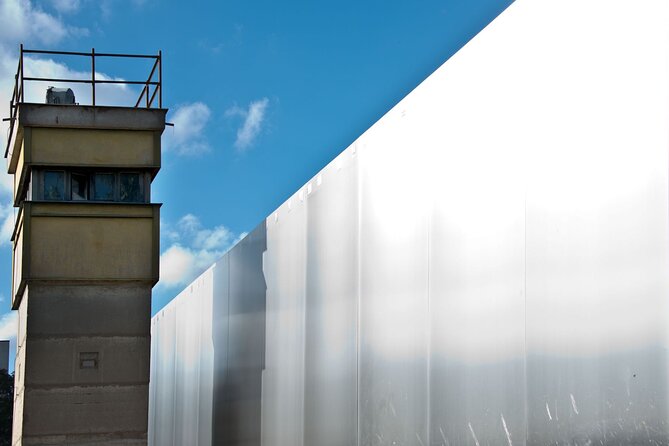
Next comes Stiftung Neue Synagoge Berlin – Centrum Judaicum. Here, the focus is not abstract victimhood. You hear a story of civil courage tied to the night of broken glass, including how a police officer helped save the building.
This stop gives you a different lens on the Nazi period. Instead of only discussing persecution through monuments after the fact, you see how people and institutions responded in real time, even when that response carried huge risk.
It is brief, so treat it as a foundation stop. I recommend using it to ask your guide what they think is easy to misunderstand about this chapter.
Memorials that sit with you: deportation and Holocaust sites in GDR contrast
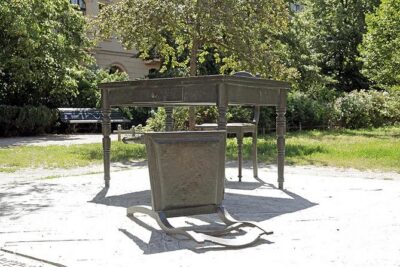
Mid-route, you visit a memorial for victims of deportation and the Holocaust that was designed in GDR times. The tour highlights how it contrasts sharply with the more famous memorial site near Brandenburg Gate.
That contrast is valuable because it reminds you that memory politics changed depending on who held power in Berlin. Different governments told different stories about the same events, and Berlin still carries that tension on the ground.
Then you also pass one of the three main memorial sites connected to the biggest victim groups of the Holocaust. The order and exact memorial may vary by timing and route planning, but the intent is clear: you are not only seeing one narrative. You are seeing how Berlin acknowledges multiple groups impacted by Nazi terror.
The Wall where it still feels physical: Memorial of the Berlin Wall
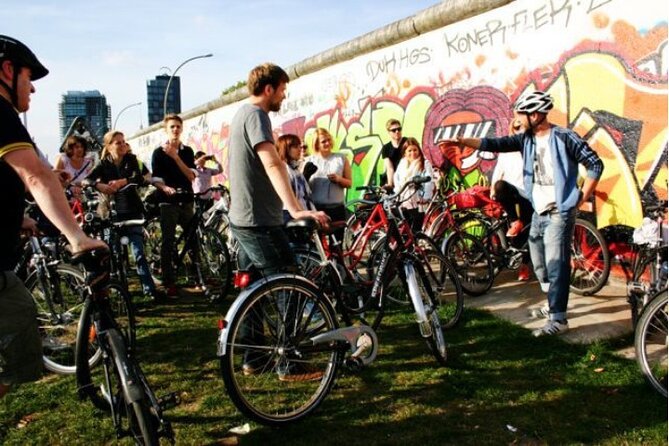
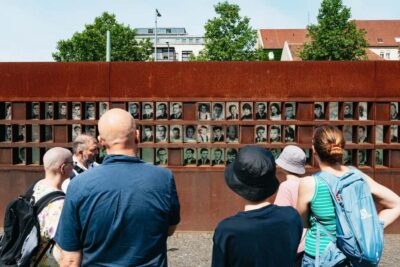
The heart of the experience is the Memorial of the Berlin Wall. The tour describes three spots where the Wall is still alive, and calls this one the place where you can really grasp what the Wall meant in daily life.
What you should look for is scale and placement. Bikes help here because you can stop at the right points without losing the thread of the story. You are not just looking at a line on the ground. You are being pointed toward what the Wall did to movement, visibility, and everyday choices.
This stop is short, but it is the moment that usually makes the rest of the day snap into place.
Mauerpark: the flea market built on border logic
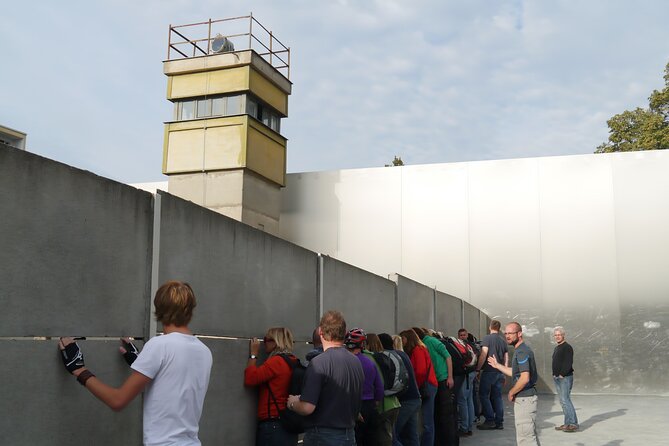
Then you reach Mauerpark, a place today known for the Sunday flea market. The tour connects that relaxed modern scene to the East German rulers’ efforts to establish the perfect border.
That is a powerful comparison. One side of your view shows normal Berlin life. The other side is the fact that the border mindset was engineered into public space.
If you take a moment to watch people while you listen, you get the most out of this stop. It is one of those places where the present is doing historical work.
Humboldthain Flak Tower: Nazi architecture plus a view
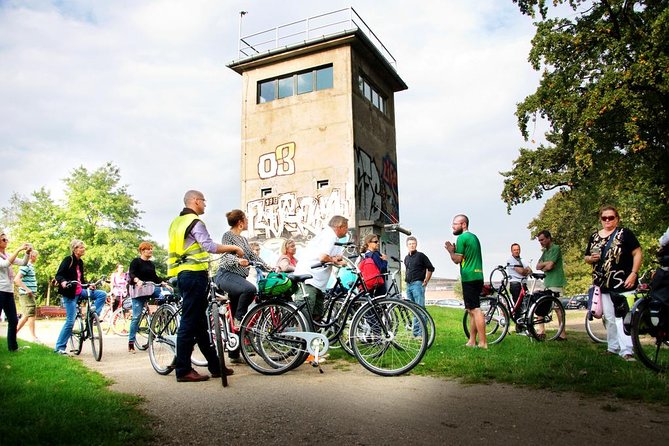
At Humboldthain Flak Tower, you learn how the structure functioned as a giant fortress and air-raid shelter. The tour also links it to Nazi-era architectural thinking, and you get a fantastic panoramic view.
This is one of my favorite types of stops on Berlin tours: you look out over the city while you hear how the Nazis wanted buildings to work as statements and defense systems.
The tradeoff is time. The stop is about 10 minutes, so the view is more about orientation than a long photo session.
Günter Litfin Memorial and the first shooting at the Wall
Another sharp Wall-related stop is the Gunter Litfin Memorial. The tour notes that an original tower was preserved to remember Günter Litfin, described as the first person shot at the Wall.
This is heavy material. I like that the tour does not drift into vague generalities. It gives a named reference point, which makes the Wall story feel less like a talking-point and more like a sequence of real moments.
Invalidenfriedhof: when the Wall cut through a cemetery
At Invalidenfriedhof, you see the cemetery cut in the middle by the Wall. The tour explains it as a burial place for the heroes of German military history, with the blunt note that some people remembered there are not the same kind of figures you would necessarily want to honor.
This stop is short, but it brings up a key Berlin theme: memory is not neutral. Even places meant for remembrance can be used to frame ideology.
If you are sensitive to provocative memorial choices, tell your guide where you want more context.
Spreebogenpark and Albert Speer’s Great Hall vision
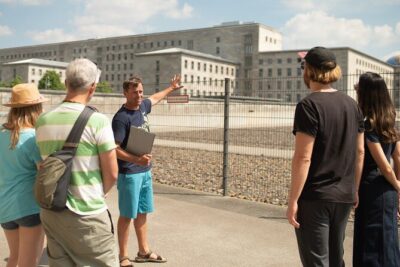
Next is Spreebogenpark, where the tour gives you an overview of Berlin’s governing district and explains the scale of Nazi planning. The big name here is Albert Speer, including his vision to build the Great Hall with room for 180,000 people.
This is a “look at the city and hear the plan” stop. Standing in a park that points you toward government buildings makes the idea feel less theoretical. It also helps you see how architecture can be used to project power.
If you like political design and propaganda through buildings, you will enjoy this segment a lot.
Reichstag Building: power grabs and democracy, seen from outside
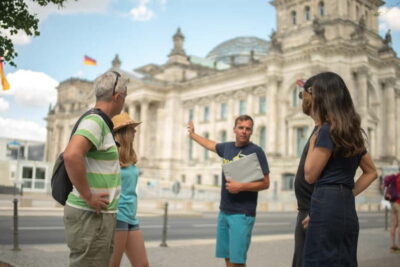
You then reach the Reichstag Building. The tour frames the stop around Hitler’s grab of power and Germany’s democratic history. You do not have time to go inside, but you still get the best of it from the outside.
This is a smart approach when you have limited hours. It keeps you on the bike and keeps the day moving, while still giving you a key anchor for the political story.
If you crave interior access, you can pair this tour with another visit later. But for connecting the dots, the outdoor perspective works well.
Holocaust Memorial cluster: scale, meaning, and the weight of irony
Then you come to the major Holocaust Memorial (Memorial to the Murdered Jews of Europe). The tour describes it as the biggest genocide memorial in the world, created by the ones responsible for the killing, and notes that its size and importance to history are incredible.
Even when you come in with prior knowledge, the sheer scale usually changes your posture. You tend to slow down, read the space, and let the silence do its job.
A practical tip: bring your attention with you. This is not the kind of stop where you can chat through it and call it done.
Hitler’s last days at Fuhrerbunker, now just a parking lot
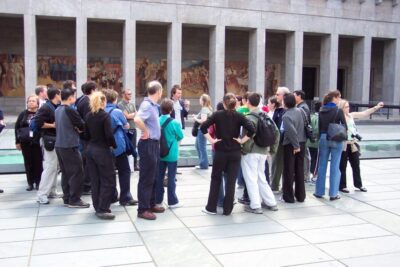
At Fuhrerbunker, the tour points out that this is the location where Hitler hid during the final weeks and eventually committed suicide. Today, you mainly see a parking lot, and the guide explains why.
That contrast is the whole point. Berlin does not always preserve the past with obvious markers. Sometimes it covers it, repurposes it, and forces you to learn the location by story rather than by appearance.
If you are the type who likes historical realism, this stop lands hard. If you only want dramatic looking ruins, you may find this one less visually exciting, but it is historically gripping.
Checkpoint Charlie on the English departure: Cold War tension in a small space
Finally, the tour reaches Checkpoint Charlie. The tour notes that this stop is only included in the English version. It explains why the station was so famous and how it became a flashpoint between the USA and USSR.
The most useful thing here is how your guide translates the geography into tension. The area is small, but the history is enormous. If you have ever wondered how close the Cold War sometimes came to catastrophe, this is the stop where that question gets answered plainly.
Who this tour is for, and who might want a different plan
This is a great fit if you are:
- A history lover who wants context, not just photos
- Curious about the Wall as a system, not only a few famous points
- Traveling with kids who can handle an outdoor education format
It is also a good choice if you want flexibility. The Free-Berlin concept means your guide can shape the route around what your group cares about, rather than forcing one fixed loop.
You might consider something else if you:
- Want long, unhurried time at a single memorial
- Prefer mostly indoor museum stops rather than cycling between sites
Booking timing and comfort tips that will help you enjoy it
This tour offers several departures throughout the day, and you get a mobile ticket. It is also family-friendly, with the note that infant seats can be provided on request, as long as children are accompanied by an adult.
Because it operates in all weather, I suggest packing for Berlin reality: layers, a rain shell if needed, and gloves if it is chilly. Short stops mean you will be moving again quickly, so comfort while riding matters more than comfort during long sightseeing.
Also, since it is private, you can often ask for small adjustments like slower pacing if someone in your group is tired, or spending an extra minute at a stop that hits the right theme for you.
Should you book this Berlin Wall and Third Reich bike tour?
I think you should book it if your goal is to understand Berlin’s 20th-century history through movement. The mix of Wall sections, Holocaust memorials, and power-era architecture gives you a rounded view without drowning you in logistics.
It also helps that it scores 4.9 out of 5 with 96% recommended, and the biking approach makes sense. One clear theme from the experience is that biking lets you cover more ground than a pure walking plan, while keeping the guide’s explanation audible and easy to follow.
If your top priority is museum-style depth or you want interior access, you may pair this with other visits. But as a focused, guided, efficient way to grasp the Wall and the Third Reich era in one outing, it is a strong pick.
FAQ
How long is the Berlin Wall and Third Reich private bike tour?
The tour is about 3 hours.
How much does the tour cost?
The price is $107.42 per person.
Is this tour private or shared?
It is a private tour. Only your group participates.
What languages are available?
The tour is offered in English and German. Dutch, French, and Spanish may be possible on request.
Does the tour run in bad weather?
Yes. It operates in all weather conditions, so dress appropriately.
Where do I meet the guide?
You meet at Free Berlin Bike Tours & Rental, Poststraße 11, 10178 Berlin. The tour ends back at the same meeting point.
What is included, and do I need to bring a bike or helmet?
A professional guide, bicycle use, and a helmet are included.
What is the cancellation policy?
You can cancel for free up to 24 hours in advance for a full refund. If you cancel less than 24 hours before the experience’s start time, it is not refunded.
The Berlin Bike Lanes
Wartime History Walks We Have Reviewed
Following the Wall a Little Further
Everything else we filed on Berlin
- East Berlin: City of Shadows Walking Tour
★ 5.0 · 11 reviews - Berlin: Die Stachelschweine – Frank Lüdecke – Träumt Weiter
★ 4.7 · 11 reviews - Potsdam Day Trip from Berlin with a Local: Private & Personalized
★ 4.0 · 11 reviews - An Introduction to Berlin Walking Tour
★ 5.0 · 11 reviews - DJ for a Day: Learn to Mix Like a Pro in Berlin
★ 5.0 · 11 reviews - 2-H Segway Sightseeing Tour Berlin
★ 4.5 · 11 reviews
Berlin Wall and Divided City Tours, side by side.
 ★ 4.8Nuremberg: Tunnels and Secret Passages in the City Wall TourFrom $142,334 reviews
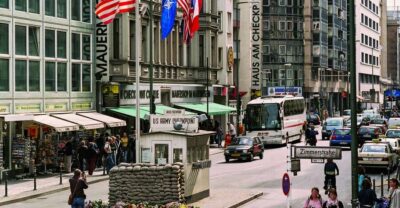 ★ 4.1Skip-the-Line: Berlin Wall Museum at Checkpoint CharlieFrom $212,041 reviews
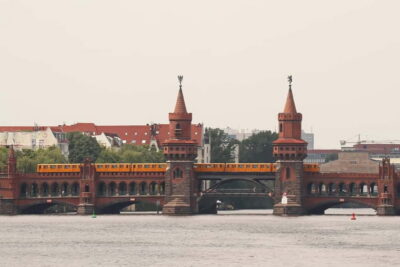 ★ 4.0Berlin: East Side Gallery Spree Cruise in a Solar CatamaranFrom $271,039 reviews
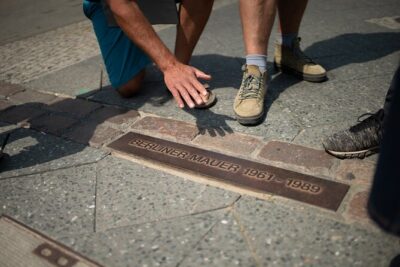 ★ 5.0Cold War, Berlin Wall, Spies and the East Side GalleryFrom $181,024 reviews
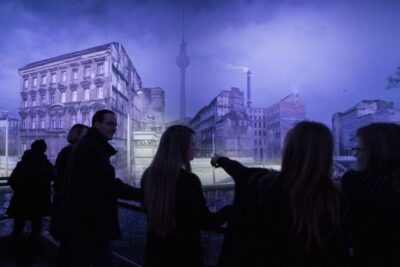 ★ 4.5THE WALL: asisi Panorama Berlin TicketFrom $16580 reviews
 ★ 4.7Berlin: Guided Bike Tour of the Berlin Wall and Third ReichFrom $40499 reviews
 ★ 4.8Berlin: Cold War Walking Tour on Berlin Wall RouteFrom $26437 reviews
 ★ 4.9East Berlin and the Wall: Walking TourFrom $351407 reviews
Other lists this tour is on